

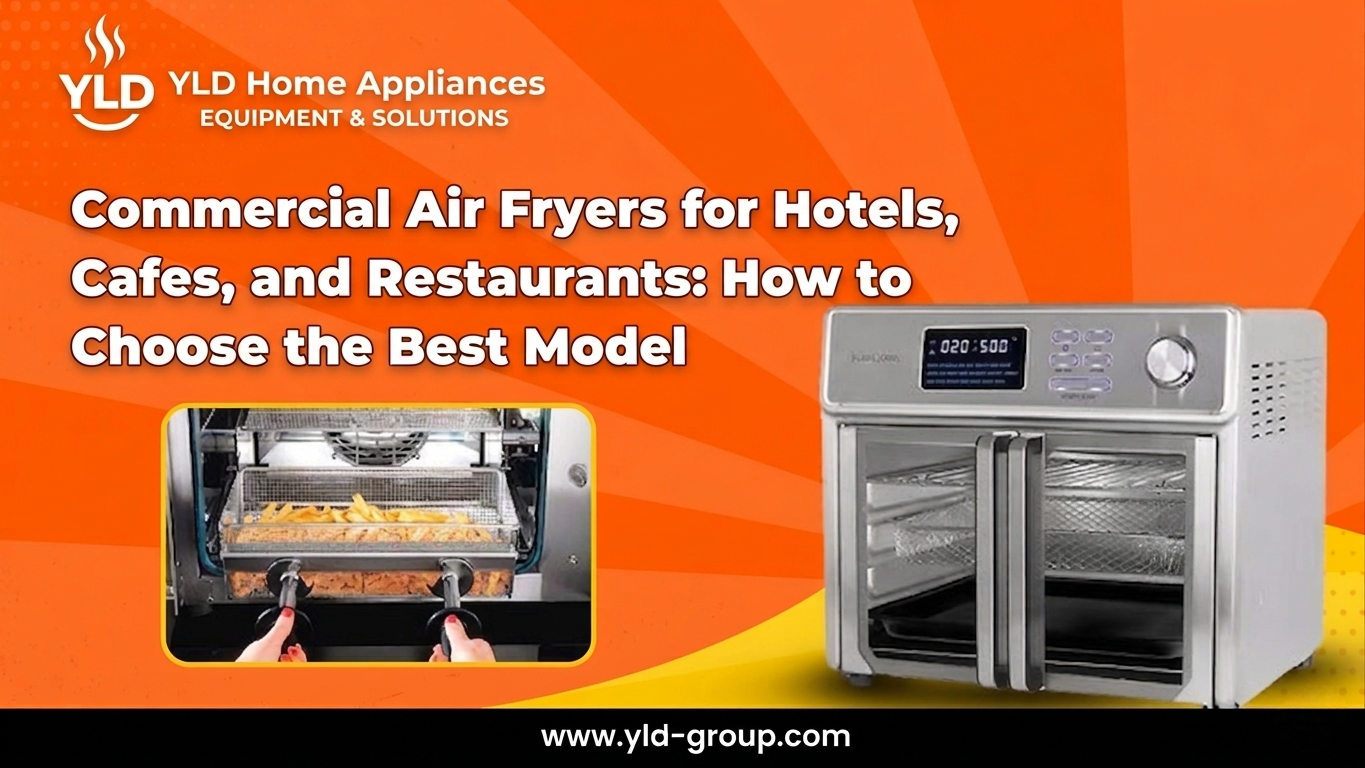

In today’s foodservice market, speed, consistency, energy efficiency, and menu flexibility matter more than ever. Hotels, cafés, restaurants, and quick-service outlets all need equipment that can deliver quality food while helping reduce labor and operating costs. That is exactly why commercial air fryers are becoming a serious purchasing category for professional food businesses.
For B2B buyers, choosing the best air fryer models is not just about appearance. It is about capacity, durability, certifications, local voltage compatibility, OEM options, and long-term resale value.
This guide is created for serious bulk buyers, importers, and distributors who want to source the right model for hospitality and foodservice channels. It will help you evaluate commercial air fryer options from both a sourcing and profitability perspective.
Why Demand is Growing in Foodservice Markets?
The hospitality industry is shifting toward faster cooking formats and healthier menu positioning. Businesses need equipment that can prepare fries, chicken, snacks, bakery items, and reheated foods with less oil. They also need consistent cooking speed and crisp results across daily operations.
For many operators, a commercial fryer is no longer enough on its own. Buyers now want a system that can support oil reduction, easier cleaning, and better countertop efficiency. That is why many professional kitchens are adding an restaurant fryer alternative that fits modern operational needs.
In practical terms, commercial buyers are seeing strong demand from:
- Quick-service brands with limited prep space
- Coffee shops adding hot food menus
- Cloud kitchens seeking low-oil menu expansion
- Retailers targeting premium small appliance categories
This is not only a cooking trend. It is also a business opportunity for distributors looking to sell equipment with modern positioning and stronger retail appeal.
What B2B Buyers Really Care About?
Importers and distributors do not buy only on appearance. They buy based on market demand, resale potential, and reliability. Before selecting a model, most buyers want answers to a few practical questions.
- Will this unit sell well in my market?
- Can I offer OEM branding?
- Does the supplier support certifications?
- Will the product reduce returns and complaints?
- Can the factory handle repeat bulk orders?
For many commercial kitchens, the right kitchen fryer should deliver speed, durability, and easy operation. At the same time, a buyer needs a product that looks modern enough for retail shelves and strong enough for daily professional use.
This is especially important for online sellers and retail chains. They need products that are easy to position, visually attractive, and supported by proper technical documentation. If the product fails in reliability or compliance, the result is higher return rates and lower customer trust.
Key Types of Commercial Air Fryers Buyers Should Understand
Choosing the right commercial unit starts with understanding the main product types available in the market. Each model is designed for a different kitchen setup, output level, and business need. For importers, distributors, and hospitality buyers, knowing these differences makes sourcing decisions more accurate and profitable.
Fryer Oven
A fryer oven is a practical option for cafés, kiosks, and smaller foodservice businesses. It offers good menu flexibility and works well in operations where compact size and countertop convenience are important.
Convection Fryer
A convection fryer uses circulating hot air to deliver more even heating and crisp cooking results. This type is popular in professional kitchens because it supports better consistency, smoother workflow, and more reliable food quality.
Deep Fryer
A deep fryer is still widely used in many commercial kitchens, especially where traditional fried texture is required. However, many buyers compare it with air-based alternatives when looking for lower oil consumption and easier cleaning.
Countertop Fryer
A countertop fryer is ideal for commercial spaces where kitchen area is limited. These units are often preferred by café chains, convenience food operators, and quick-service businesses that need efficient performance in a smaller footprint.
How to Evaluate Fryer Performance Before Buying?

For commercial electric air fryer buyers, performance matters more than appearance. A unit may look modern, but the real value comes from how well it performs in daily kitchen operations, especially during busy service hours.
Heating Stability and Temperature Control
A dependable electric fryer should offer stable heating, quick recovery time, and accurate temperature control. Many buyers prefer electric models because they are easier to install, cleaner to operate, and simpler to maintain in commercial settings.
Output Capacity
Capacity should always be evaluated based on production needs, not just machine size. A good fryer machine should be able to handle the required number of portions per cycle while maintaining steady performance during peak demand.
Basket Design and Product Handling
A well-designed basket fryer can improve loading, unloading, and overall cooking consistency. This becomes especially important for operators preparing fries, chicken, and snack items in repeated batches throughout the day.
Control System and User Convenience
Many professional buyers now prefer a digital fryer because digital controls support better timing accuracy and more consistent cooking results. Features like touch panels and preset menus are especially useful for hotels, cafés, and chain-based operations.
What Makes a Good Model for Hotels, Cafes, and Restaurants?
Choosing the right model starts with understanding usage environment, output level, and buyer channel.
A hotel buffet may choose a compact fryer oven to handle breakfast items, sides, and reheating. It offers this functionality without taking up too much kitchen space. A café may opt for a convection fryer to efficiently cook pastries, sandwiches, frozen snacks, and quick lunch items. This configuration supports fast, consistent results for a busy menu. A restaurant chain may prioritize higher basket capacity and faster recovery time.
At the commercial level, the appliance must support controlled air frying performance rather than simple consumer convenience. That means the machine should provide:
- Stable temperature control
- Efficient airflow circulation
- Food consistency across batches
- Easy cleaning access
- Durable external housing
- Low failure risk in repeated use
For many buyers, the appliance is not just a kitchen device. It is a profit tool.
Capacity Matters More Than Most Buyers Think
One of the most common sourcing mistakes is buying based on looks instead of output.
A professional frying machine should be selected according to expected service volume. If capacity is too small, staff will need multiple cooking cycles, slowing down service and frustrating end users. If capacity is too large for the intended market, the product may become harder to sell due to price and footprint.
When evaluating size, buyers should look at:
- Basket dimensions
- Total cavity volume
- Power rating
- Batch efficiency
- Turnaround time between cycles
For smaller hospitality kitchens, an electric deep fryer replacement does not always need to be oversized. However, for busier kitchens, batch capacity is directly linked to labor efficiency and customer wait times.
Countertop vs Higher Output Configurations
A compact coucntertop fryer is often ideal for cafés, snack counters, and hotel pantries where floor space is limited. These models are easier to place, easier to ship, and usually more attractive to resellers targeting small commercial buyers.
However, businesses with heavier turnover may need a stronger electric fryer format designed for longer duty cycles. For B2B importers, this is where product segmentation becomes important. It is smart to source multiple configurations rather than a one-size-fits-all lineup.
A supplier offering several structure options gives distributors more flexibility to serve different customer segments.
Heating Performance and Cooking Consistency
A commercial buyer should never evaluate the product based on appearance alone. Internal performance is what protects the business after sale.
A good fryer machine should maintain even heating across repeated cycles. If temperature drops too much between batches, food texture becomes inconsistent. This causes complaints from hospitality buyers who depend on repeatable results.
A well-designed basket fryer should also support:
- Easy loading and unloading
- Sufficient airflow around food
- Minimal sticking
- Safe handling during busy operations
Consistency is especially important for operators serving fries, wings, frozen snacks, breaded items, and fast-moving side dishes.
Why Smart Controls Matter for Foodservice Buyers
Commercial users increasingly prefer intuitive operation. Staff turnover in hospitality is high, so equipment must be easy to use with minimal training.
A reliable smart fryer or digital fryer can help standardize cooking results through preset timing, adjustable temperature ranges, and simple control interfaces. This matters for restaurant chains, cafés, and hotel kitchens where multiple employees may use the same machine across shifts.
For B2B retailers, digital controls also improve perceived product value. That makes the appliance easier to position in premium commercial or prosumer segments.
Build Quality is a Serious Buying Factor
For long-term commercial use, construction quality matters just as much as heating power.
A large fryer aimed at hospitality buyers should have strong exterior materials, durable handles, stable feet, and internal components designed for repetitive use. A heavy-duty fryer should not feel like a lightly modified home appliance.
Buyers should also look for:
- Stainless steel body options
- Durable non-stick food-contact surfaces
- Secure basket mechanism
- Heat-resistant housing design
- Strong packaging for export transit
Poor material selection leads to early complaints, damaged units, and reduced reorder confidence.
Oil-Free Positioning is a Strong Sales Advantage
End users are increasingly interested in lower-oil cooking for both health and convenience reasons. That creates a strong market angle for B2B resellers.
A good oil-less fryer offers cleaner operation and easier maintenance than traditional fryers. That positioning works especially well in hotel breakfast kitchens, compact cafés, and modern food counters.
Products marketed around oil free cooking also tend to perform well in retail and e-commerce because they connect with consumer demand while still offering foodservice relevance.
For distributors, this creates a useful dual-market opportunity: hospitality and premium household resale.
Menu Performance Still Comes First
No matter how attractive the health angle is, the machine still has to deliver food quality.
A successful unit should produce a crispy fryer result across popular menu items such as fries, wings, nuggets, pastries, frozen snacks, and side dishes. It should also operate as a fast fryer for businesses where speed directly affects revenue.
Hotels, cafés, and restaurants do not buy on theory. They buy on performance.
If the product cannot support real menu applications, it will not become a long-term winner in your distribution portfolio.
Best Buyer Match by Business Type
Different customer groups need different positioning.
Hotel Buyers
A hotel fryer should be easy to operate, compact enough for controlled kitchen environments, and suitable for breakfast items, room-service snacks, and side dishes.
Coffee Shops and Small Food Counters
A cafe fryer works best when it supports limited-space operations and short cooking cycles for hot snacks and lunch add-ons.
Restaurants and Catering Operators
A food fryer for larger service environments should offer more consistent output and easier workflow integration. A catering fryer may need better batch handling and more durable exterior construction.
Chef-Led Kitchens
A chef fryer should deliver predictable results, adjustable control, and strong material quality.
For distributors, segmenting your offer by customer type makes selling much easier.
Certification Requirements Buyers Should Never Ignore
For B2B sourcing, certifications are not optional. They are a trust signal and, in many cases, a market-entry requirement.
Depending on the destination market, buyers may need:
- ETL / UL / FCC for North America
- CE / GS / RoHS / LFGB for Europe
- RCM for Australia and nearby markets
A professional fryer with proper compliance support is much easier to sell through retail chains, marketplaces, and institutional channels.
OEM / ODM: What Private Label Buyers Should Look For

Private label buyers should think beyond the appliance itself. They should assess whether the supplier can help build a sellable product line.
A good restaurant airfryer supplier should support:
- Logo printing
- Color customization
- Packaging customization
- User manual localization
- Market-specific plug and voltage options
- Sample development
- Stable reorder capability
This matters because a strong private label product is not just functional. It must also look market-ready and brand-ready.
If your business serves resellers or e-commerce brands, private label support can significantly improve margins and customer loyalty.
Why Supplier Capability Matters More Than Price Alone?
Many buyers make the mistake of comparing only quotation sheets. That usually leads to long-term problems.
When evaluating a supplier for commercial air fryers, buyers should also examine:
- Factory experien
- Quality control process
- OEM/ODM flexibility
- Sample support
- Packaging quality
- Export experience
- Communication efficiency
- After-sales responsiveness
A lower unit price means very little if the product causes complaints, shipment delays, or inconsistent reorder quality.
This is why serious importers increasingly prefer working with factories that understand B2B sourcing requirements rather than only domestic wholesale trading.
YLD Home Appliances: Your Partner for Commercial Air Fryers
YLD Home Appliances brings over a decade of experience in designing and manufacturing commercial-grade air fryers. We provide fully customizable solutions for distributors, importers, and private label brands, combining reliability, innovation, and market-ready designs.
- Innovative Product Design: Develop efficient, user-friendly air fryers that suit modern kitchens and commercial environments.
- Continuous Innovation: Our R&D team monitors kitchen appliance trends to enhance performance, functionality, and energy efficiency.
- Sustainable Manufacturing: Environmentally conscious production and energy-efficient designs help businesses meet sustainability goals.
Final Thoughts
Choosing the best commercial air fryer is more than picking an appliance. It ensures consistent food quality. For B2B buyers, certified and durable models reduce risks. They satisfy end users. They create repeat business.
Ready to elevate your kitchen offerings with reliable, high-quality commercial air fryers? Explore our range at YLD Home Appliances and discover models designed for hotels, cafés, and restaurants.
Contact us today to source your next kitchen solution.