




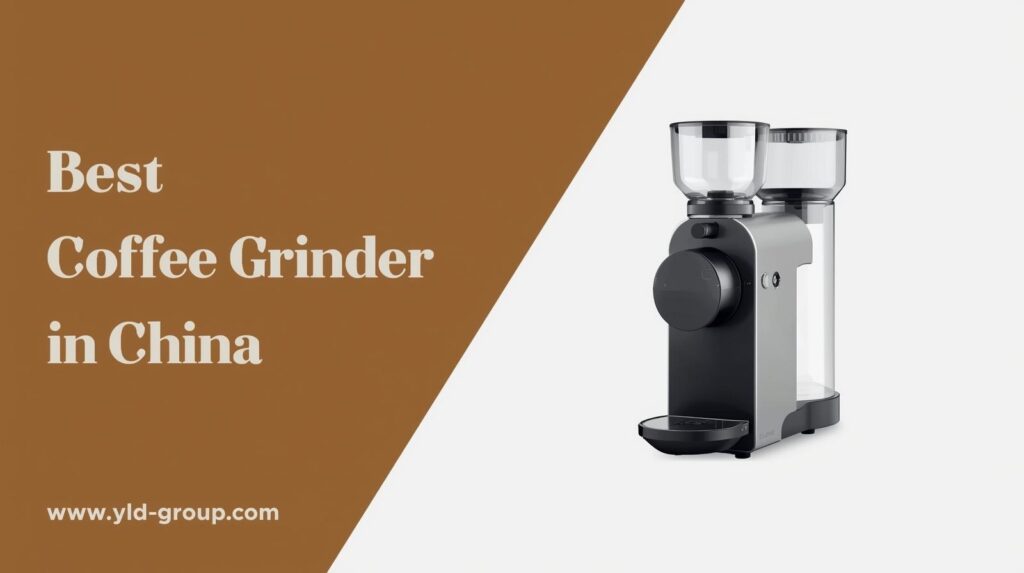
Coffee culture has grown rapidly across the world. From home brewing enthusiasts to specialty cafés, the demand for precision coffee grinding continues to increase. Behind many of the best coffee grinders sold globally, Chinese manufacturers play a major role.
China is not just producing entry-level appliances anymore. It has evolved into a highly organized manufacturing ecosystem capable of supplying:
- Manual coffee grinders
- Electric burr grinders
- Commercial high-capacity grinders
- Smart programmable models
- Private label and fully customized units
What makes China stand out is not only production scale. It is the combination of engineering capability, cost control, supply chain efficiency, and OEM flexibility. Factories are equipped with CNC machining systems, precision burr processing equipment, automated assembly lines, and strict quality inspection protocols.
For global importers, distributors, and appliance brands, this creates a strong advantage. You can source grinders that are affordable, technically competitive, and adaptable to your brand requirements.
Comprehensive Range of Coffee Grinders Manufactured in China
Chinese factories typically organize production across several main categories. Each category targets a different market segment.
1: Manual Coffee Grinders
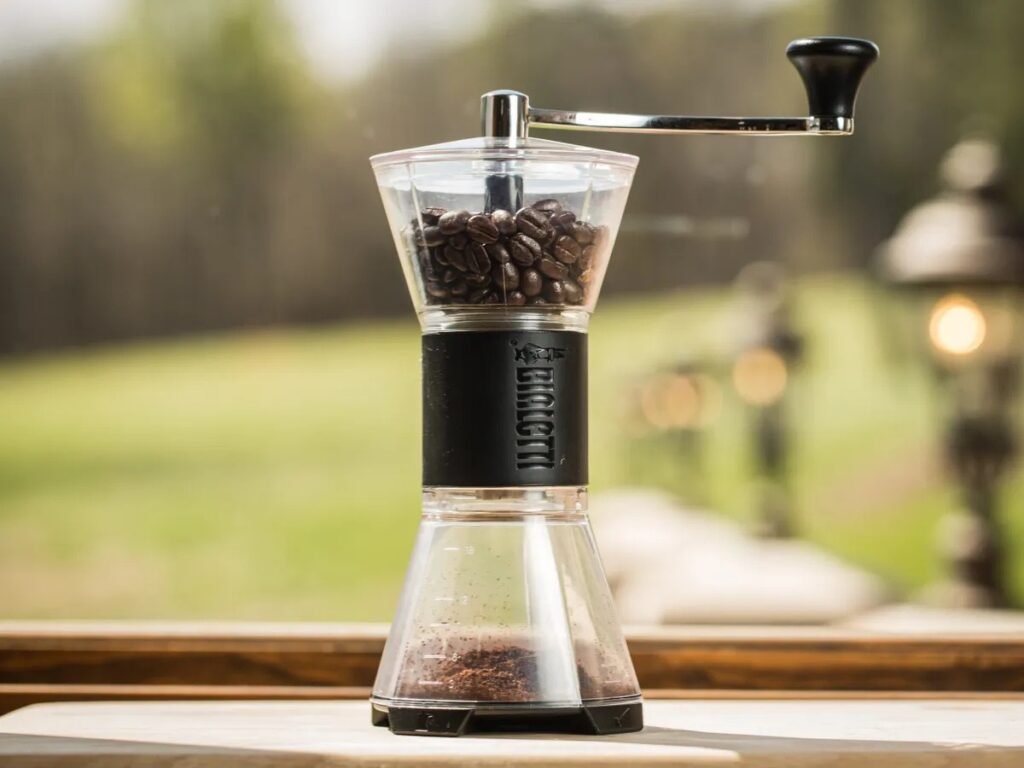
Manual grinders are portable, low-cost, and simple to use. They are perfect for travel, small households, or gifting purposes.
Most manual grinders manufactured in China use either ceramic burrs or stainless-steel burrs. The burr system ensures more consistent grinding compared to blade models. Adjustment rings or knobs allow users to switch between coarse, medium, and fine grind settings.
These models are popular in:
- Outdoor and camping markets
- E-commerce gift bundles
- Entry-level coffee equipment stores
- Premium minimalist product lines
Factories now produce upgraded manual models with:
- CNC-machined aluminum bodies
- Stainless steel conical burr sets
- Stepless micro-adjustment systems
- Anti-slip silicone bases
Despite being affordable, many Chinese manual grinders now compete with premium international brands in both performance and durability.
2: Electric Burr Coffee Grinders
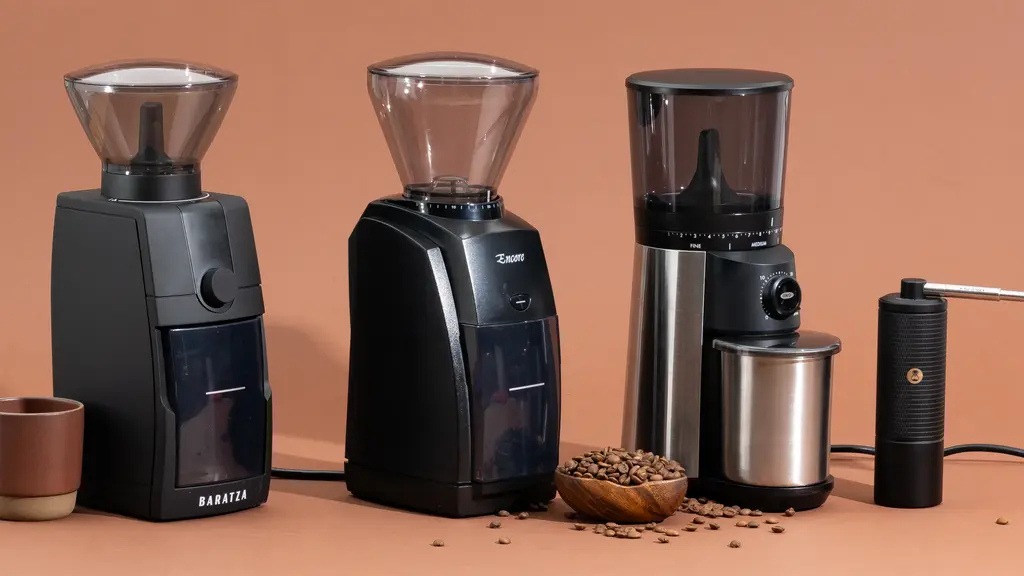
Electric burr grinders represent the largest export segment. These grinders are designed for consistency, speed, and convenience.
There are two main burr types:
Conical Burrs
Operate at lower RPM, produce less heat, and preserve aroma. Suitable for home brewing and pour-over coffee.
Flat Burrs
Provide extremely uniform particle distribution. Often preferred for espresso applications and specialty cafés.
Chinese manufacturers now integrate features such as:
- Stepped or stepless grind adjustment
- Digital timer control
- Programmable dosing
- Anti-static discharge systems
- Low retention chamber design
These grinders are widely exported to Europe, North America, and the Middle East, where consumers demand precision without excessive pricing.
3: Commercial Coffee Grinders

Commercial grinders are engineered for high-volume environments. Cafés, restaurants, hotel buffets, and coffee chains rely on these machines for daily operation.
Key characteristics include:
- High-torque motors
- Larger diameter burrs (64mm, 74mm, or above)
- Continuous duty cycle support
- Dual dosing programs
- Cooling systems to prevent overheating
Some factories also produce modular commercial grinders, allowing buyers to upgrade burr size or dosing systems later. This flexibility supports café expansion without full equipment replacement.
Materials and Engineering Standards
A strong coffee grinder must balance durability, food safety, and performance.
Chinese manufacturers commonly use:
- Stainless steel burr sets
- Aluminum alloy motor housings
- ABS or PC food-grade plastic
- Tempered glass bean hoppers
- Copper-wound motors for efficiency
Before mass production, components undergo tolerance inspection. Burr alignment testing is particularly critical because uneven alignment can cause inconsistent grind size.
Advanced factories use laser calibration and micron-level burr gap measurement to ensure uniform grinding performance.
Customization and OEM/ODM Capabilities
One of the biggest advantages of sourcing from China is customization flexibility. Factories offer two primary models:
OEM (Original Equipment Manufacturing)
You select an existing grinder model. The factory customizes:
- Logo printing or laser engraving
- Packaging design
- Color variations
- Plug type and voltage
- User manual branding
OEM is cost-effective and ideal for distributors launching private label products.
ODM (Original Design Manufacturing)
For brands wanting a unique product, factories provide:
- Industrial design services
- 3D modeling and prototyping
- Mold development
- Mechanical engineering optimization
- Exclusive product rights agreements
ODM requires higher initial investment but allows full product differentiation.
Many manufacturers now provide low-MOQ customization options, helping small brands enter the market without excessive inventory risk.
Quality Control Systems in Manufacturing
Reliable coffee grinder manufacturers implement multi-stage inspection procedures:
Incoming Material Inspection
Raw materials such as burrs, motors, and circuit boards are tested before assembly.
In-Process Quality Control
Assembly lines conduct random torque tests, motor speed checks, and grind consistency sampling.
Final Product Testing
Each grinder is tested for:
- Noise level
- Grinding uniformity
- Overheating protection
- Electrical safety
- Stability under load
Export-oriented factories ensure compliance with CE, RoHS, GS, or ETL certifications depending on the destination market.
This structured quality control approach ensures product reliability and reduces after-sales risk for importers.
Production Capacity and Global Supply Chain Strength
China’s manufacturing advantage extends beyond the factory floor.
Key strengths include:
- Established component supplier networks
- Efficient logistics and port access
- Bulk raw material sourcing
- Automated packaging lines
- Shorter lead times compared to many regions
Large factories can produce tens of thousands of units per month. Smaller specialized manufacturers focus on premium or customized batches.
This scalability allows buyers to start small and expand gradually without switching suppliers.
Pricing Advantage Without Sacrificing Performance
One reason China leads globally is cost structure efficiency.
Lower labor costs, integrated supply chains, and optimized production processes allow factories to maintain competitive pricing while still investing in R&D.
Buyers can typically find:
- Entry-level manual grinders at highly accessible price points
- Mid-range electric burr grinders with strong value-to-performance ratio
- Commercial grinders priced significantly lower than Western brands
This pricing flexibility supports both budget and premium market segments.
Why China Leads Globally in Coffee Grinder Manufacturing?
China maintains leadership because it combines several critical factors:
- Technical manufacturing expertise
- Customization flexibility
- Scalable production capacity
- Competitive pricing
- International certification readiness
- Mature export infrastructure
Factories continuously refine motor efficiency, burr precision, and digital control integration. Innovation is no longer limited to high-end Western brands. Many Chinese manufacturers now develop smart grinders with programmable grind profiles and integrated timing systems.
For global buyers, this means access to advanced features without excessive cost.
Advanced Manufacturing Infrastructure in China
One of the strongest reasons China dominates the coffee grinder industry is its advanced manufacturing ecosystem. Production is not limited to simple assembly lines. Instead, it involves integrated systems that combine R&D, precision tooling, automated assembly, and strict inspection procedures.
Most professional coffee grinder manufacturers operate inside organized industrial clusters. These clusters allow suppliers of motors, burr sets, electronic PCBs, plastic injection molds, stainless steel parts, and packaging materials to work in close coordination. This reduces production delays and keeps costs under control.
Factories commonly use:
- CNC machining for precise burr cutting
- Automated motor winding machines
- Injection molding systems for durable outer housings
- Laser calibration tools for grind consistency
- Computerized quality testing equipment
This level of integration ensures stable production capacity and consistent product quality across large volumes.
For international buyers, this means:
- Shorter lead times
- Large-scale production capability
- Flexible order quantities
- Reliable quality consistency
Manufacturers are capable of handling small pilot orders as well as bulk container shipments without compromising performance standards.
Strict Quality Control and Testing Standards
Quality control is not optional in this industry. A coffee grinder’s performance directly affects taste extraction, brewing consistency, and customer satisfaction. Because of this, leading Chinese manufacturers implement multi-stage inspection processes.
Quality testing typically includes:
- Motor durability testing (continuous operation simulation)
- Burr sharpness and hardness testing
- Noise level measurement
- Grind size consistency analysis
- Drop and vibration tests for transport durability
- Electrical safety testing
Many factories follow international certifications such as:
- CE (Europe)
- ETL / UL (North America)
- RoHS compliance
- GS certification
- ISO 9001 quality management systems
Commercial grinders undergo additional endurance tests to simulate café-level usage. Motors are tested for extended operational cycles to ensure longevity.
This structured quality control system ensures that products meet the expectations of global distributors, retailers, and coffee brands.
Affordable Production Without Compromising Performance
Affordability is one of China’s most competitive advantages, but it is important to understand why products remain cost-effective.
Lower costs are not achieved by reducing quality. Instead, they result from:
- Economies of scale
- Strong supplier networks
- Optimized logistics
- Automation in production
- Skilled labor specialization
Because raw material suppliers are located near production hubs, transportation costs remain low. Bulk component purchasing further reduces per-unit costs.
This cost efficiency benefits:
- Private label brands
- E-commerce sellers
- Importers and distributors
- Supermarket chains
- Promotional gift companies
Buyers can source entry-level manual grinders, mid-range electric grinders, or professional burr grinders at competitive price points while maintaining strong margins in their domestic markets.
Global Export Experience
Shenzhen YLD Home Appliances serves clients across:
- North America
- Europe
- Middle East
- Southeast Asia
- Australia
- South America
Our export team manages:
- Compliance documentation
- Product certification coordination
- Shipping logistics
- Container loading supervision
- International labeling requirements
This experience reduces operational risk for overseas buyers.
Why Shenzhen YLD Home Appliances Leads?

Our leadership in coffee grinder manufacturing is built on strategic strengths:
- Integrated Supply Chain: Component sourcing, assembly, and packaging operate within a coordinated production system.
- Strong Customization Capabilities: We support both OEM and ODM partnerships.
- Scalable Production Capacity: From pilot runs to full container orders, production remains consistent.
- Competitive Pricing Structure: Optimized manufacturing reduces cost without reducing quality.
- Continuous Product Innovation: Our R&D team adapts to evolving coffee brewing trends.
- Global Compliance Readiness: Products meet international safety and certification standards.
These advantages position Shenzhen YLD Home Appliances among the most reliable coffee grinder manufacturers in China.
Final Thoughts
Choosing the right manufacturer determines your product reputation, customer satisfaction, and long-term growth. In today’s competitive coffee equipment market, success depends on more than just product availability. It requires precision engineering, consistent quality control, strong customization capability, and a manufacturing partner that understands global standards.
Partner with Shenzhen YLD Home Appliances
The search for the best coffee grinder in China should lead to a manufacturer that understands engineering precision, brand differentiation, and global trade requirements.
At Shenzhen YLD Home Appliances Limited, we combine customization flexibility, affordable production, and international quality standards. Whether you are launching a new private label brand or expanding your appliance portfolio, we provide dependable solutions backed by professional support.
We welcome distributors, retailers, and brand owners to explore long-term cooperation.
Most Asked Questions
Q1: What types of coffee grinders does Shenzhen YLD Home Appliances manufacture?
Answer: We manufacture a complete range of coffee grinders, including manual grinders, electric blade grinders, electric burr grinders (flat and conical), and commercial-grade coffee grinders. Our product line is designed to serve home users, specialty coffee brands, distributors, and café equipment suppliers worldwide.
Q2: Do you offer OEM and private label services for coffee grinders?
Answer: Yes. We provide full OEM services including logo printing, customized colors, packaging design, multilingual manuals, and compliance labeling. We also support ODM projects for clients who require exclusive product designs and customized internal configurations.
Q3: What certifications do your coffee grinders comply with?
Answer: Our products can comply with international standards such as CE, ETL/UL, RoHS, and ISO quality management systems, depending on the target market requirements. We assist clients in meeting regulatory standards for Europe, North America, and other global regions.
Q4: What is your typical minimum order quantity (MOQ)?
Answer: MOQ depends on the specific model and customization level. Standard models generally have lower MOQs, while customized OEM or ODM projects may require higher quantities due to tooling and production setup requirements.
Q5: How do you ensure quality control during production?
Answer: We implement multi-stage quality control, including raw material inspection, in-line assembly checks, motor endurance testing, grind consistency verification, and final safety inspection. Each batch undergoes strict evaluation before shipment to ensure consistent performance and durability.
