


The global kitchen appliance market is rapidly evolving. Today, importers, distributors, retailers, and private label brands are no longer focused solely on low cost appliances. They are looking for energy-efficient, smart, and модерна кухињска решења.
Sourcing the right products requires strategy. Buyers must consider market demand, certifications, manufacturing quality, supplier reliability, and private label opportunities. High-efficiency appliances appeal to both end-users and commercial buyers because they offer lower energy consumption, better reliability, and longer lifespans.
YLD кућни апарати provides advanced ОЕМ и ОДМ solutions for global business partners. We deliver certified, енергетски ефикасни уређаји designed for modern retail and distribution needs.
Today, we will explore key considerations for B2B buyers. We will also explain how distributors and importers can choose reliable manufacturers. This helps secure high-quality, енергетски ефикасни кухињски уређаји. This also supports long-term business growth.
Market Demand: Why Energy Efficient Cooking Appliances Are Booming?
Energy efficient kitchen appliances are experiencing rapid global growth. Rising energy costs and increasing environmental awareness are pushing consumers toward smarter purchasing decisions. As a result, both residential and commercial buyers are prioritizing appliances that reduce power consumption without compromising performance.
In many markets, energy efficient cooking appliances are gaining traction because they offer:
- Lower electricity bills for long-term savings
- Compliance with government energy regulations and standards
- Eco-friendly appeal for environmentally conscious consumers
- Higher value perception in modern kitchens and smart homes
Мало energy efficient home appliances such as air fryers, induction cookers, electric kettles, and blenders are especially popular. These products combine convenience with reduced energy usage, making them ideal for everyday use.
For importers, distributors, and wholesalers, these products provide:
- Strong and growing demand across global markets
- Better positioning in premium and mid-range segments
- Higher customer satisfaction and repeat purchases
- Opportunities to align with sustainability trends
Because of these advantages, many private label brands and retailers are expanding their portfolios with energy efficiency appliances. This shift is not just a trend. It is becoming a long-term market standard.
Real Buyer Pain Points in Energy Efficient Appliance Sourcing
Energy efficient small appliances sourcing brings different challenges for different types of buyers. Each segment faces unique risks that can affect profitability, operations, and long-term growth.
Importers & Distributors: Profitability and Supply Risks
Importers and distributors focus on stable supply and strong margins. Any disruption in quality or delivery can directly impact business performance.
These buyers often prioritize:
- Consistent product quality across all shipments
- Reliable supply chains for bulk and repeat orders
- Competitive pricing to maintain profit margins
- Flexible MOQ and private label options
However, common challenges include inconsistent quality, delayed shipments, limited customization, and poor communication from manufacturers.
Retail Chains & Online Sellers: Performance-Driven Buying Decisions
Retailers and e-commerce sellers operate in a results-driven environment where product performance directly influences revenue. Every product must meet both customer expectations and platform requirements.
From a business perspective, success is determined by several critical factors:
- Product reliability, which minimizes returns and negative feedback
- Compliance certifications, ensuring smooth market access
- Modern design and visual appeal, improving conversion rates
- Verified energy efficiency, strengthening consumer trust
Failure to meet these criteria can lead to reduced sales, increased returns, and long-term brand damage.
Private Label Buyers: Demand for Customization and Innovation
Private label (OEM/ODM) buyers require more than standard manufacturing. Their focus is on building differentiated products that align with their brand positioning and target markets.
This requires capabilities such as customized design, branded packaging, and ongoing product development. However, a significant industry challenge is the gap between claimed and actual supplier capabilities. Many manufacturers promote OEM/ODM services but lack the technical expertise or R&D infrastructure to support true customization.
This often results in limited flexibility, delayed product development, and missed market opportunities.
Energy Efficiency: What It Actually Means for Buyers
Energy efficiency impacts cost, reliability, and market appeal. Buyers now prefer appliances that save energy without compromising performance.
High-efficiency products offer:
- Lower electricity bills and operating costs
- Longer lifespan and better reliability
- Compliance with energy regulations
- Stronger appeal to eco-conscious consumers
Small electric kitchen appliances like blenders, air fryers, and induction cookers are especially popular. For B2B buyers, these products boost customer satisfaction, repeat orders, and private label opportunities.
YLD кућни апарати provide certified, energy-efficient OEM vs ODM solutions designed for modern markets and long-term growth.
Product Types: Choosing the Right Models for Your Market
Избор right product mix is critical for B2B buyers. Different models target different customer needs and affect both sales volume and profit margins. Understanding these distinctions helps distributors, retailers, and private label brands make strategic sourcing decisions.
(a) Household Models
Household kitchen appliances are designed for everyday home use. They are typically affordable, making them accessible to a wide customer base.
These products generate high sales volumes due to consistent demand in residential markets. Families and rental properties often drive repeat purchases.
Importers and distributors benefit from easy logistics and broad market appeal. These models are ideal for mass-market retail and e-commerce channels.
(b) Commercial Models
Commercial kitchen appliances are built for higher durability and heavy use. They are suitable for restaurants, cafes, and other professional kitchens.
Although the sales volume is lower than household models, the profit margins are higher. Businesses are willing to pay more for reliability and performance.
B2B buyers sourcing commercial models must prioritize quality and supplier support. Strong warranties and certified components reduce operational risks.
(c) Multifunction Appliances
Multi function kitchen appliances combine several features in a single product. They are designed for modern kitchens where convenience and space-saving matter.
These products appeal to tech-savvy and efficiency-focused consumers. Their versatility creates strong demand in both retail and online marketplaces.
For distributors and private label brands, multi function appliances provide an opportunity to differentiate their portfolio. Premium pricing and high perceived value make them attractive for long-term growth.
Manufacturing Capability: What Serious Buyers Should Evaluate
Choosing the right factory is often more important than the product itself. A reliable manufacturer ensures consistent quality, timely delivery, and the ability to support long-term growth. B2B buyers must carefully evaluate manufacturing capabilities before placing orders.
1: Production Capacity
Production capacity determines whether a factory can handle large orders efficiently. Buyers should check if the supplier can maintain stable supply chains for both short-term and bulk orders.
Factories with flexible capacity can scale production based on seasonal demand or new market opportunities. Consistent output reduces risks of stockouts and delayed shipments.
A strong production capacity ensures that importers, distributors, and private label brands can meet market demand reliably.
2: Production Lines
The type of production line affects consistency and efficiency. Automated lines often deliver higher output with uniform quality, while manual processes may require more oversight.
Evaluating the workflow helps buyers understand potential bottlenecks or quality variations. Consistent production ensures that every batch meets market standards.
Factories with well-organized production lines can adapt quickly to order changes and minimize delays.
3: Quality Control Systems
Effective quality control (QC) is non-negotiable for serious buyers. Reliable manufacturers implement checks at multiple stages:
- Incoming material inspection to prevent defects at the source
- In-process checks to maintain standards during production
- Final testing to ensure finished products meet specifications
Strong QC systems reduce returns, complaints, and compliance issues for B2B buyers.
4: R&D Capability
Research and development (R&D) is essential for OEM/ODM projects and product innovation. Factories with R&D support can develop new models tailored to market trends.
R&D capability allows private label brands to differentiate their products and create unique selling points. It also helps manufacturers improve energy efficiency, durability, and design.
For serious buyers, evaluating a supplier’s R&D expertise is critical for long-term growth and competitive advantage.
Quality Control in Energy Efficient Appliances
Even small defects in energy efficiency in appliances can lead to high return rates, unhappy customers, and damage to your brand.
Leading manufacturers test every appliance rigorously:
- Electrical safety is verified to prevent hazards.
- Durability tests simulate long-term use.
- Performance checks confirm that the product works as advertised.
- Energy efficiency is measured to ensure promised savings.
Strong QC reduces risks, boosts customer satisfaction, and strengthens brand credibility. For distributors, importers, and private label brands, QC becomes a competitive advantage rather than just a compliance step.
Private Label Opportunities in Energy Efficient Appliances
Private labeling is one of the fastest-growing opportunities in the energy-efficient тржиште кухињских апарата. It allows buyers to create unique products while capturing higher margins and building brand value.
Top произвођачи кухињских апарата offer OEM и ODM услуге за customized products.
Benefits for Buyers
- Higher Profit Margins: Selling your own brand increases earnings compared to reselling third-party products.
- Brand Ownership: You control branding, positioning, and marketing strategy.
- Market Differentiation: Customized products stand out in competitive retail and e-commerce markets.
- Long-Term Growth: Strong private label portfolios can drive repeat sales and customer loyalty over time.
What to Look for in an OEM Partner
- Custom Branding Capabilities: Ensure the manufacturer can print logos and incorporate brand elements.
- Packaging Design Support: Attractive, functional packaging enhances product appeal.
- Product Customization: Ability to modify features or develop new models tailored to your market.
- Flexible MOQ: A supplier that accommodates both small test orders and large-scale production is ideal.
Partnering with the right OEM can turn energy efficient electric appliances into a strategic business advantage, providing both growth and brand recognition in global markets.
The Future of Kitchen Appliances: Key Trends for 2026
Staying ahead of market trends is critical for B2B buyers of energy efficient electrical appliances. Understanding emerging consumer preferences ensures that distributors, importers, and private label brands remain competitive.
1: Smart Energy Appliances
Appliances with app control and real-time energy monitoring are rapidly gaining popularity. These devices offer convenience, efficiency, and enhanced user engagement, appealing to tech-savvy consumers.
2: Compact Kitchen Solutions
Urban living drives demand for space-saving appliances. Compact designs fit small kitchens without compromising performance, making them ideal for apartments and modern residential projects.
3: Eco-Friendly Materials
Sustainable and recyclable components are becoming a key differentiator. Consumers and commercial buyers increasingly favor products that reduce environmental impact and meet green certifications.
4: Multi-Functional Designs
Appliances combining multiple functions into one unit are trending strongly. These designs maximize kitchen efficiency, simplify user experience, and reduce overall costs, making them highly attractive in both retail and commercial markets.
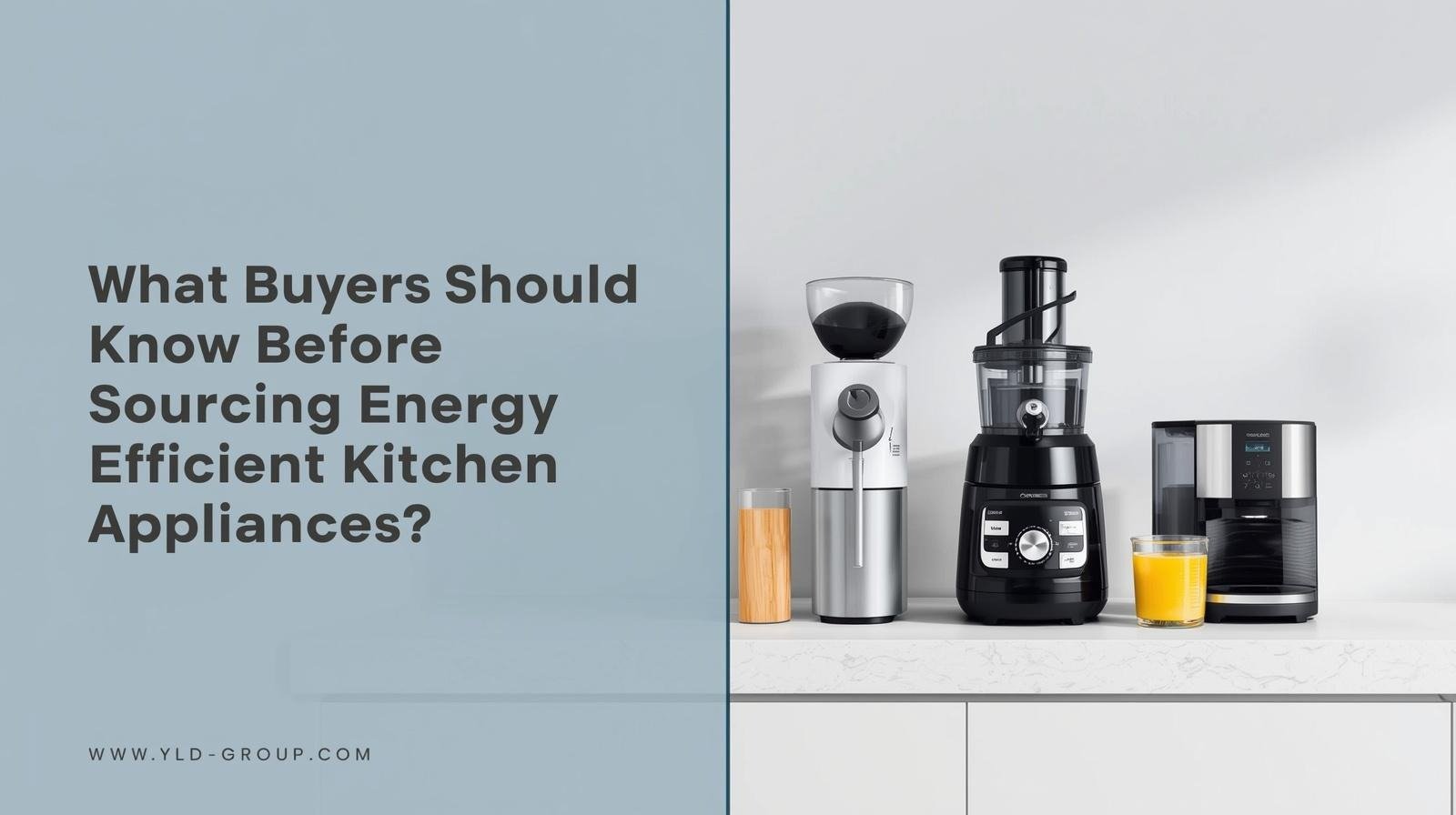
What Buyers Should Know Before Sourcing Energy Efficient Kitchen Appliances?
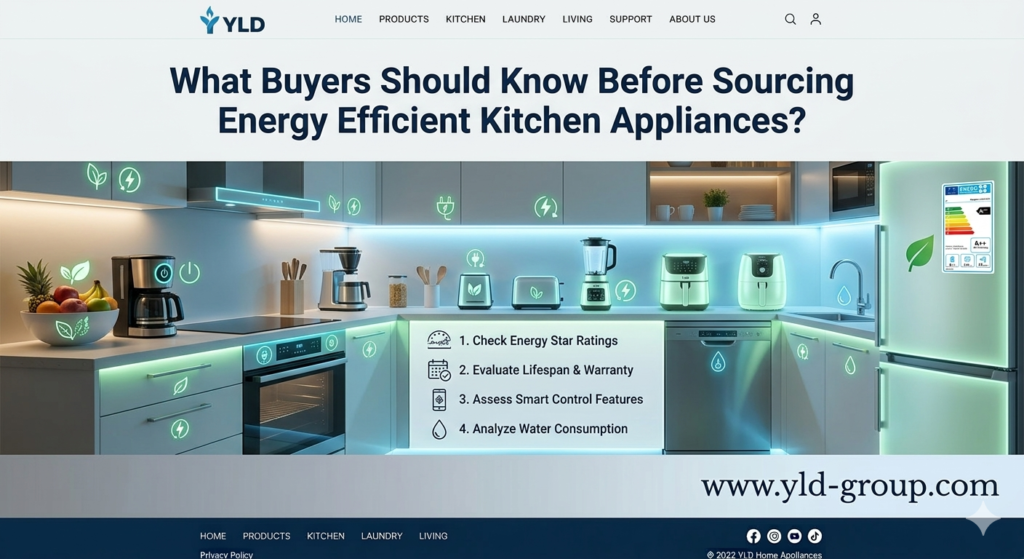
Набавка енергетски ефикасни кухињски уређаји today is more than just finding low-cost products. Buyers must evaluate market trends, supplier capabilities, and product performance to ensure profitability and long-term growth.
High efficiency appliances appeal to both residential and commercial buyers because they reduce energy costs, last longer, and provide modern functionality. For importers, distributors, and private label brands, the right products mean repeat sales, customer satisfaction, and market differentiation.
Key considerations include:
- Market Demand: Identify products that are trending and meet consumer preferences.
- Сертификати и усаглашеност: Ensure appliances meet safety and energy standards for your target market.
- Supplier Reliability: Partner with factories that offer consistent quality, timely delivery, and strong communication.
- Private Label Opportunities: Evaluate manufacturers capable of branding, customization, and small-to-large production runs.
Choosing the right supplier and product mix is a strategic decision. Those who focus on these factors gain a competitive edge, secure high-quality inventory, and position themselves for long-term success in the evolving kitchen appliance market.
Trade Shows and Factory Visits
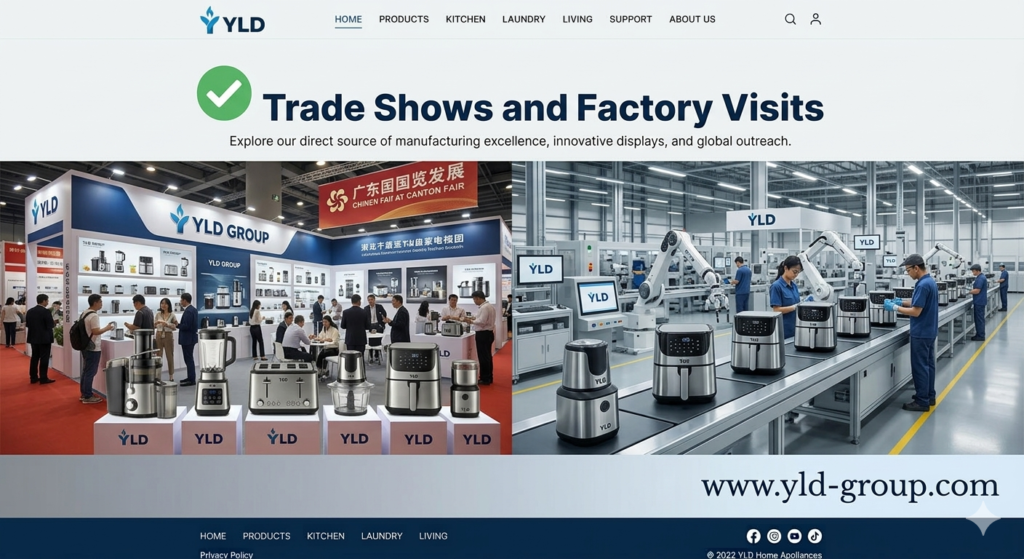
Поуздан kitchen appliances suppliers provide high-quality, certified products for global distributors. Seeing products in person builds real trust. Trade shows and on-site inspections help buyers:
- Evaluate appliances in real-world displays
- Compare materials, finishes, and functionality
- Discuss OEM customization and branding options
- Verify production capacity and quality control systems
Participation in events like the Canton Fair and visiting factories allows distributors to validate suppliers personally, ensuring smoother operations and stronger long-term partnerships.
Why Many Buyers Choose YLD Home Appliances?
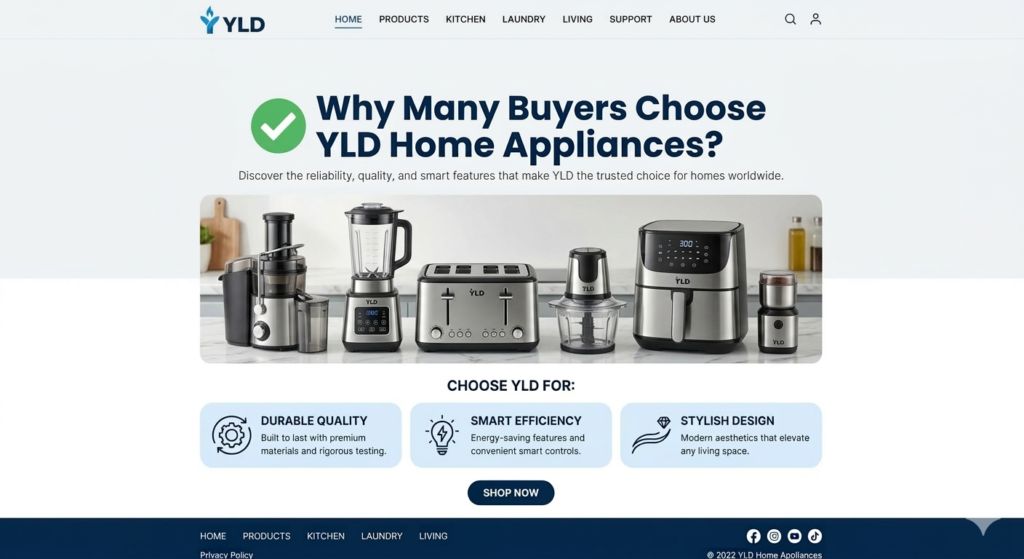
China is a leading hub for high-quality, energy-efficient kitchen appliances in China, offering competitive prices and OEM services. Distributors often choose YLD кућни апарати because they combine premium quality with global readiness:
- Широк асортиман производа: Blenders, coffee makers, and other high-end small appliances
- OEM/ODM Services: Branding, packaging, and product customization
- Сертификати: CE, ETL, RoHS for global market compliance
- Reliable Supply: Advanced production lines ensure consistent delivery
- Export Experience: Simplified logistics for international buyers
Partnering with a trusted manufacturer like YLD allows distributors to consolidate orders, reduce vendor complexity, and maintain consistent product quality.
Завршне мисли
Energy efficient kitchen appliances are no longer optional. They are essential for distributors targeting premium markets.
Partnering with experienced manufacturers like YLD кућни апарати пружају certified, customizable, and reliable products. This enables distributors to grow their brand, reduce operational risks, and succeed in competitive global markets.
Откријте наш full range of energy-efficient kitchen appliances designed for distributors and private label brands.
Контактирајте YLD Home Appliances данас to explore products, discuss customization options, and build your премиум кухињски уређаји portfolio.