

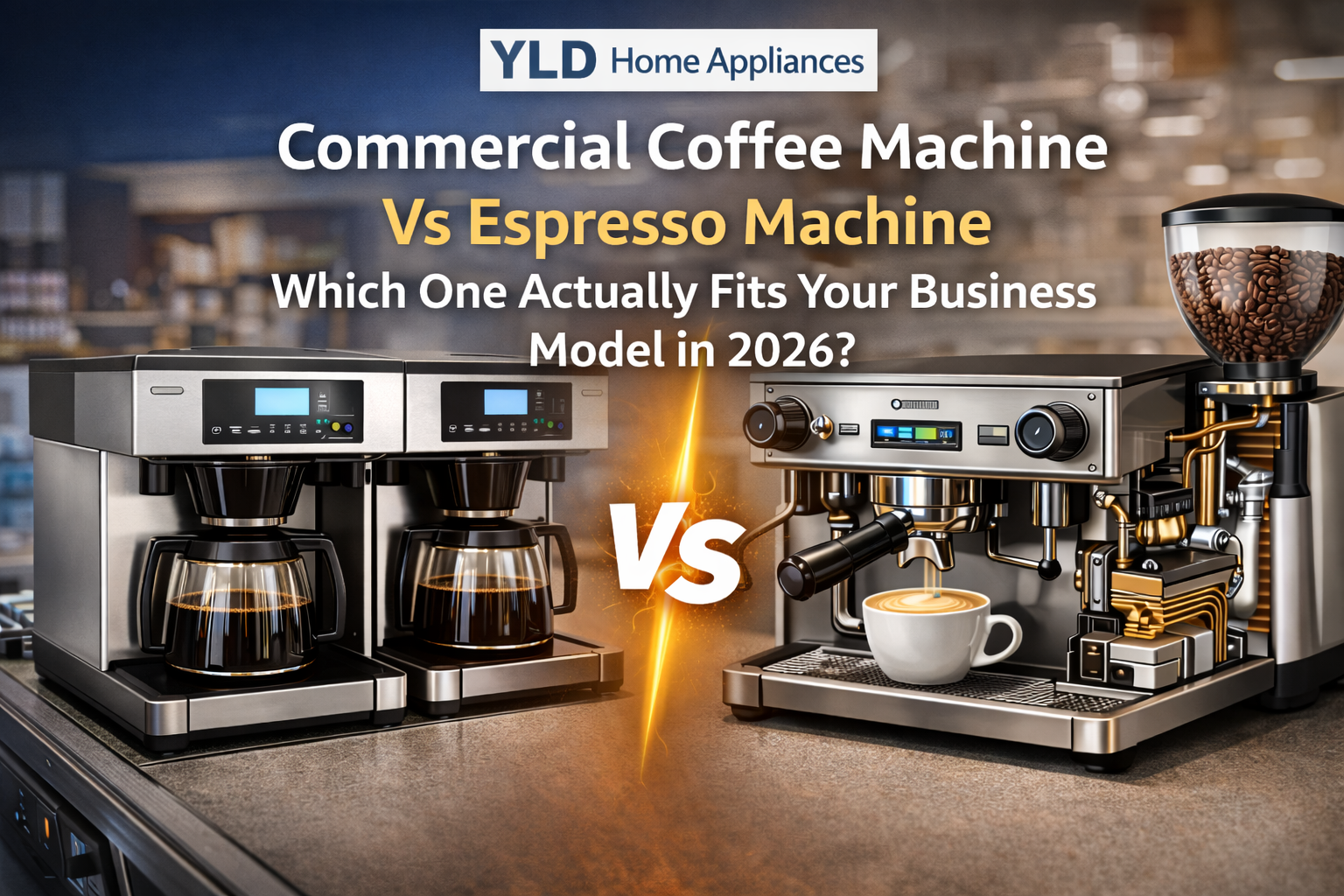

Choosing between a commercial coffee machine vs espresso machine is not just about equipment selection. It directly impacts your business model, service efficiency, and long-term profitability. The wrong choice can slow down operations and limit your growth potential.
Many cafes, hotels, and restaurant owners struggle to decide which coffee machine aligns best with their customer expectations and workflow. Both coffee machines serve different purposes and influence menu strategy, staffing, and overall customer experience.
In this guide, our team will compares both coffee machines for different business requirements. We explain important differences in a simple and clear way. It helps you select the best machine for your business.
Before choosing between different coffee machines, it’s important to understand cleaning and maintenance requirements.
What is a Commercial Coffee Machine?
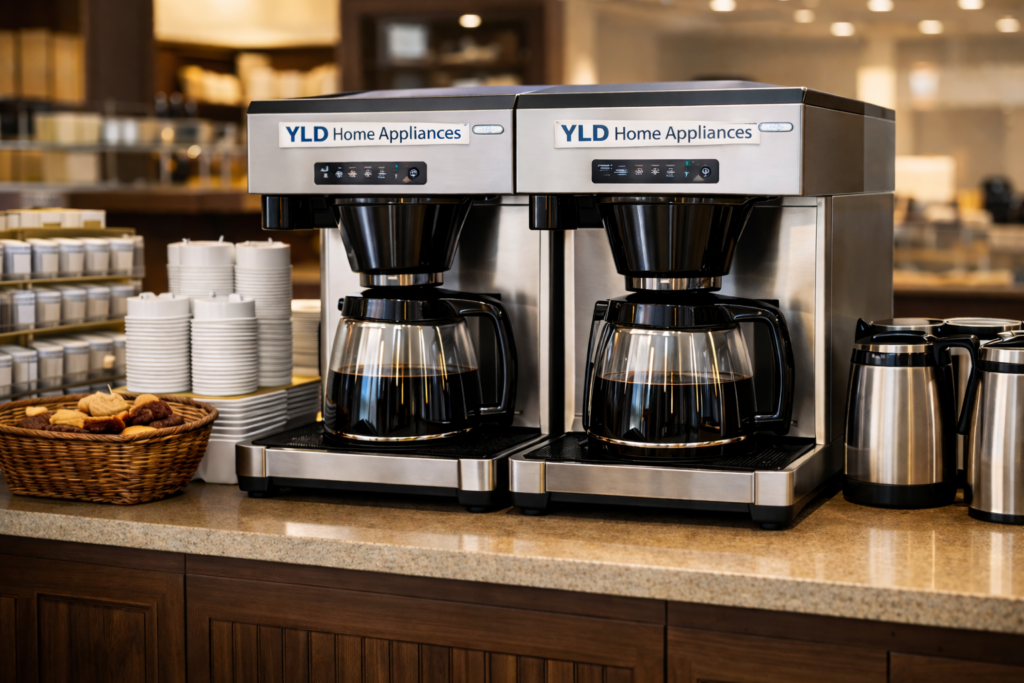
A commercial coffee machine is designed for high-volume brewing with minimal complexity and fast output. It is widely used in offices, hotels, and self-service environments where speed is a priority.
These machines focus on consistency, efficiency, and ease of operation for staff members. They are ideal for businesses that serve standard coffee to a large number of customers daily.
What is an Espresso Machine?
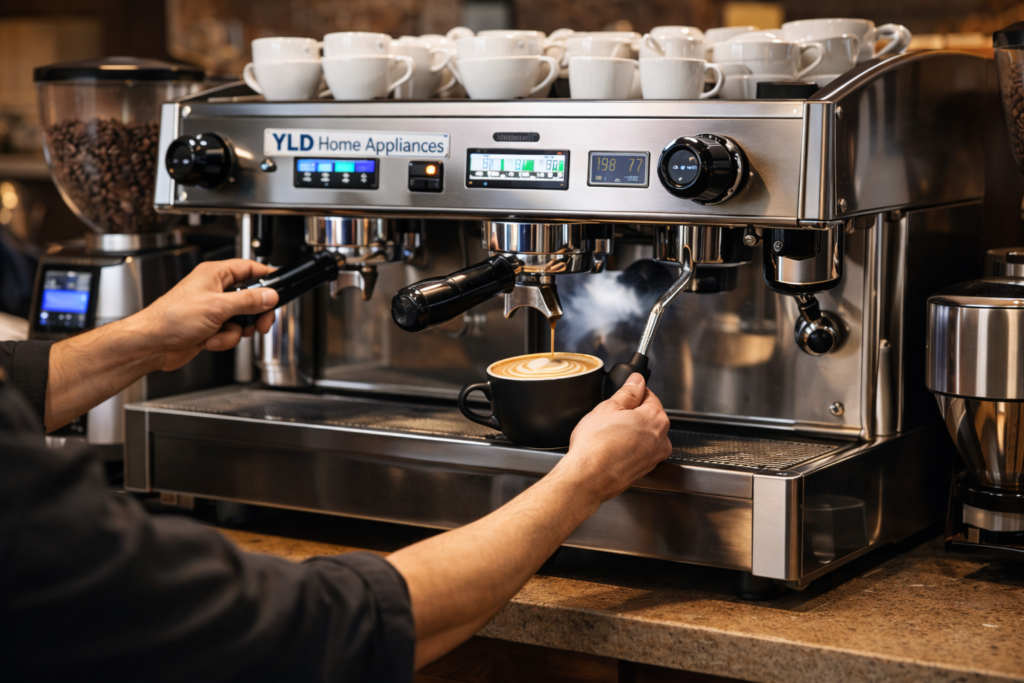
An espresso machine uses high-pressure extraction to produce concentrated coffee with rich flavor and aroma. It is commonly used in specialty cafes and premium coffee businesses.
These machines allow precise control over brewing variables such as pressure and temperature. They require trained baristas to maintain consistent quality and deliver premium beverages.
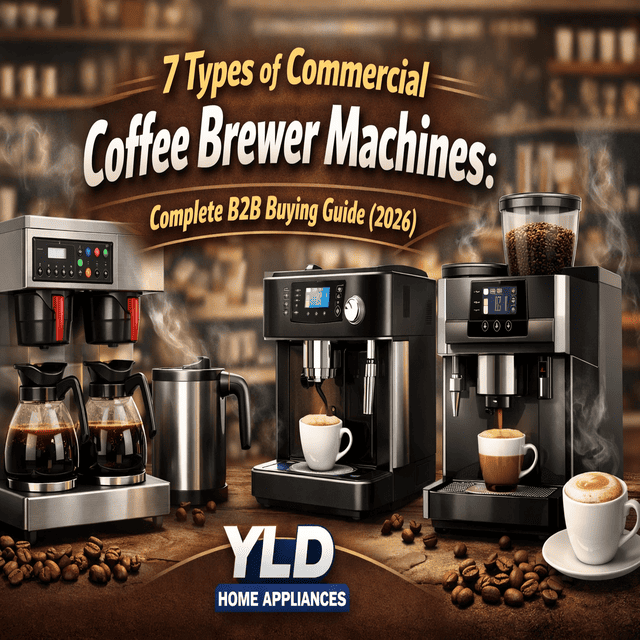
To better understand different machine categories, read our complete guide on commercial coffee brewer machine types.
Technical Specifications Comparison (Performance Level Difference)
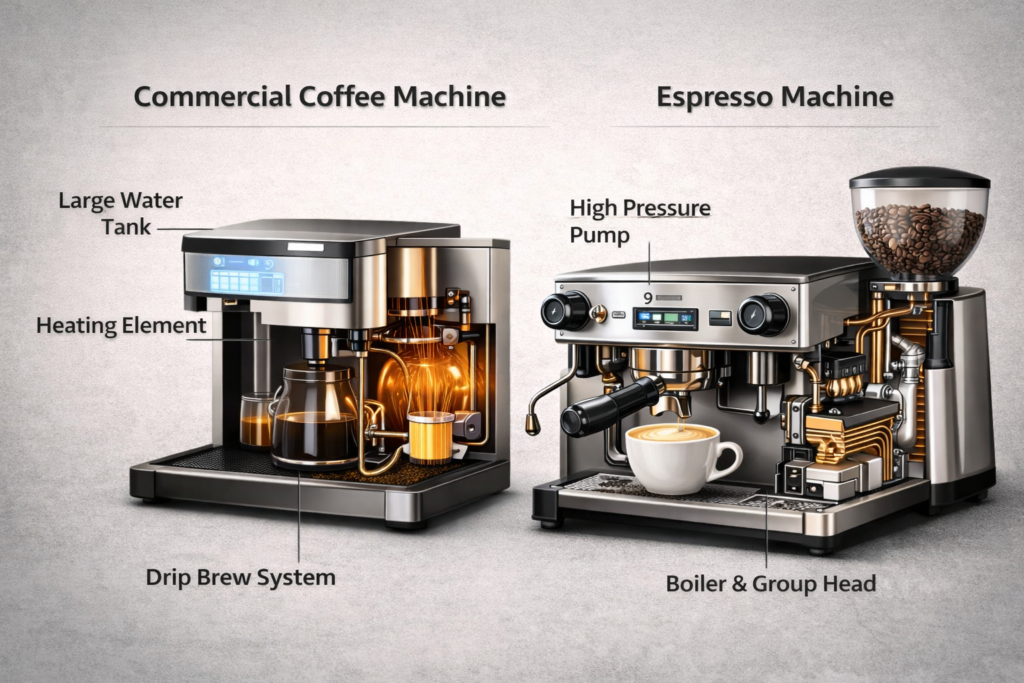
Commercial coffee and espresso machines differ significantly in their technical performance metrics. That’s why it directly impacts operational efficiency and output quality.
Commercial coffee machines typically operate using batch brewing systems with lower pressure and higher volume capacity. These machines can produce between 100 to 300 cups per hour. This makes them ideal for high-traffic environments such as hotels and corporate offices.
Espresso extraction typically operates around 9 bars of pressure, which is considered the industry standard for optimal flavor extraction. They produce coffee in smaller quantities but with higher flavor concentration and consistency. A standard espresso shot takes around 25 to 30 seconds, which limits output but enhances product quality.
Power consumption and water capacity also differ between these machines. Commercial brewers often have larger water tanks and heating systems designed for continuous operation. On the other hand, espresso machines require more precise temperature and pressure control.
Commercial Coffee Machine vs Espresso Machine: Comparison Table
This table shows the main differences clearly. It helps you choose the right machine based on your business needs.
| Feature | Commercial Coffee Machine | Espresso Machine |
| Output Capacity | 100–300 cups/hour | 40–120 cups/hour |
| Brewing Pressure | Low pressure | 9–15 bar pressure |
| Brewing Time | Batch brewing (1–3 min) | 25–30 sec per shot |
| Skill Requirement | Low | High (trained barista) |
| Menu Variety | Limited | Wide (latte, cappuccino, etc.) |
| Initial Cost | Lower | Higher |
| Maintenance | Simple | Complex |
| Best Use Case | Hotels, offices | Cafes, premium brands |
1. Speed vs Experience (Operational Priority)
Commercial coffee machines are built for speed and efficiency in high-traffic environments such as hotels and corporate offices. They allow businesses to serve a large number of customers in a short period.
Espresso machines focus on delivering a premium coffee experience where taste and presentation matter most. This makes them ideal for cafes where customers expect high-quality beverages.
2. Volume vs Margin (Business Strategy)
Commercial coffee machines generate revenue through high-volume sales and quick service cycles. Businesses can serve more customers in less time, increasing total daily sales.
Espresso machines generate higher profit margins per cup because of premium pricing and product differentiation. Customers are willing to pay more for specialty drinks and better taste.
3. Staff Skill Requirement (Hidden Cost Factor)
Commercial coffee machines are easy to operate and require minimal staff training. This reduces labor costs and allows businesses to hire less specialized staff.
Espresso machines require skilled baristas who understand extraction techniques and milk texturing. Training staff adds cost but improves overall product quality and customer satisfaction.
Additionally, labor cost plays a critical role in long-term profitability. Businesses using espresso machines must invest in training and retaining skilled baristas, which increases operational expenses.
In contrast, commercial coffee machines reduce dependency on skilled labor, allowing businesses to optimize staffing costs and improve scalability.
4. Menu Flexibility (Customer Offering)
Commercial coffee machines are designed for basic coffee offerings such as black coffee or simple brews. They are suitable for businesses that focus on speed and consistency.
Espresso machines support a wide range of beverages including cappuccinos, lattes, and specialty drinks. This allows businesses to create diverse menus and attract more customers.
5. Investment vs Long-Term Return
Commercial coffee machines have lower upfront costs and are easier to maintain over time. They are a practical solution for businesses with tight budgets or high-volume needs.
Espresso machines require higher initial investment and maintenance but offer better long-term profitability. Premium beverages allow businesses to increase pricing and improve margins.
Which Machine is Best for Different Business Sizes?
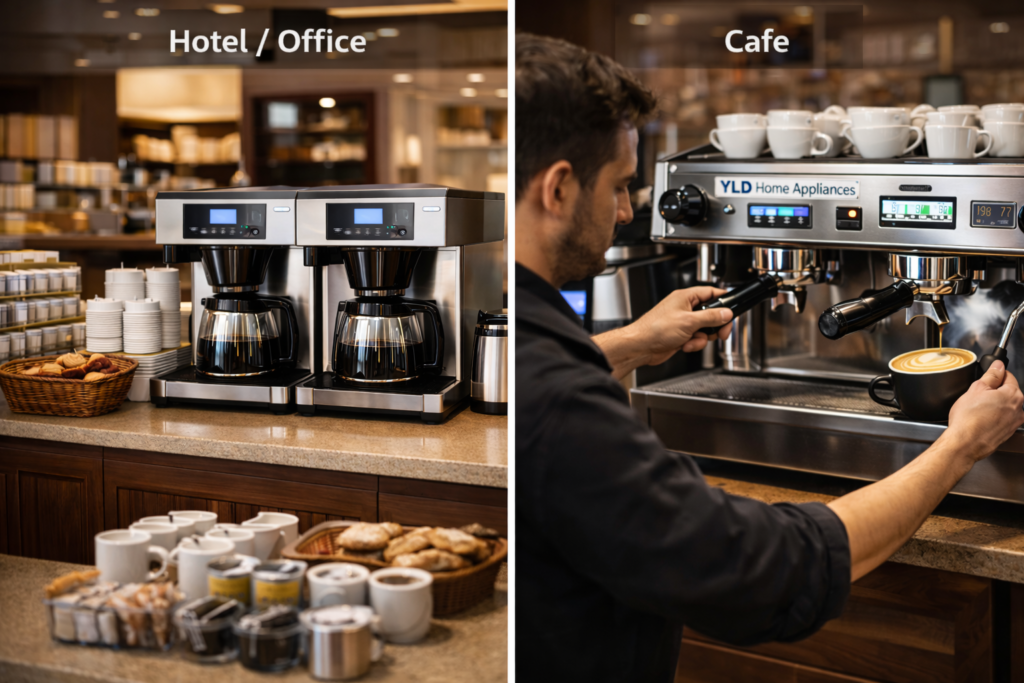
Small businesses with limited budget and lower customer volume may prefer espresso machines for higher margins per cup. However, they must be ready to invest in skilled staff.
Medium-sized businesses such as restaurants benefit from a balanced approach, where both machine types can be used depending on demand.
Large-scale businesses like hotels and corporate offices should focus on commercial coffee machines to handle high volume efficiently and maintain consistent service speed.
Pros and Cons of Commercial Coffee Machine
Pros
- High speed and efficient operation for large customer volumes
- Low training requirements and reduced labor dependency
- Cost-effective solution for bulk coffee service environments
Cons
- Limited beverage variety and customization options
- Lower profit margin per cup compared to premium drinks
- Less control over flavor and brewing quality
Pros and Cons of Espresso Machine
Pros
- High-quality coffee with strong flavor and presentation
- Wide range of beverage options for diverse customer needs
- Higher profit margins through premium pricing strategy
Cons
- Requires skilled staff and continuous training investment
- Higher upfront cost and maintenance requirements
- Slower service compared to batch brewing systems
Which Machine Generates Better ROI for Your Business?
Return on investment depends on your business model rather than just machine cost. Commercial coffee machines are designed for high-volume operations where revenue is generated through large daily sales. These machines help reduce labor costs and increase service speed, making them ideal for businesses with consistent customer flow.
On the other hand, espresso machines focus on higher profit margins per cup. Although they require skilled staff and higher initial investment, they allow businesses to charge premium prices for specialty beverages. This makes them more suitable for cafes and premium hospitality businesses.
From a B2B perspective, buyers must evaluate both revenue model and operational cost before making a decision. High-volume businesses benefit more from commercial machines, while brand-focused businesses gain more value from espresso machines.
How to Choose the Right Machine Based on Your Business Model?
Different businesses have different coffee requirements. Choosing the right coffee machine depends on your service style, customer expectations, and daily demand.
Hotel Buffet or Corporate Office
Hotels and offices need machines that can serve many people quickly. A commercial coffee machine is the best choice because it provides fast service and consistent output.
Specialty Cafe or Coffee Brand
Specialty cafes focus on quality and customer experience. Espresso machines are ideal because they help create premium drinks and build a strong brand image.
Restaurant with Mixed Demand
Restaurants often have changing customer flow during the day. Using both machines can help manage speed while also offering more drink options.
Franchise or Multi-Location Business
Franchise businesses need consistency across all locations. Commercial coffee machines are easier to scale because they require less training and deliver the same results everywhere. However, premium brands may still choose espresso machines to maintain a high-end image.
High-End Hospitality or Luxury Hotels
Luxury hotels focus on experience and quality. Espresso machines are preferred because they offer better taste and presentation. These businesses can charge higher prices, which covers the higher cost.
Choosing the Right OEM Coffee Machine Manufacturer (B2B Guide)
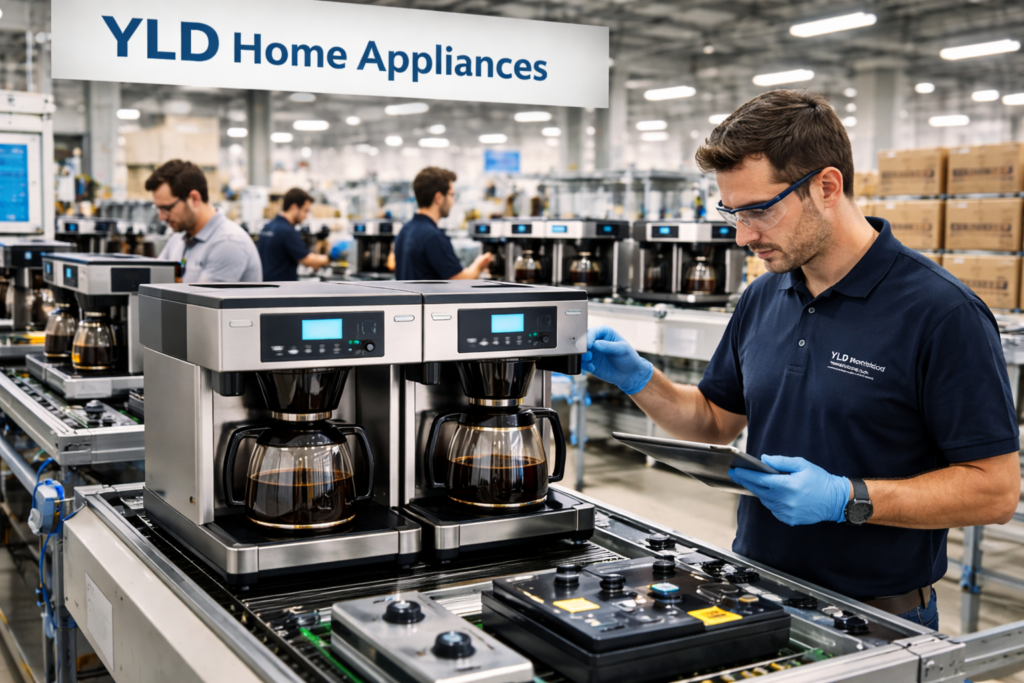
For distributors and importers, choosing between these machines depends on target market demand and business positioning. High-volume markets typically prefer commercial coffee machines, while premium markets demand espresso machines.
Working with a reliable commercial coffee brewer machine OEM manufacturer such as YLD Home Appliances allows you to customize products based on your market requirements. OEM suppliers provide flexibility in design, features, and branding options, helping you build a competitive product line.
For a complete sourcing strategy, read:
Commercial Coffee Brewer Machine: How to Choose the Right OEM Manufacturer for Bulk Orders in 2026
Mistakes to Avoid When Selecting a Coffee Machine
Many businesses also fail to align their coffee equipment with their target customer segment. For example, using a commercial coffee machine in a premium cafe environment can negatively impact brand perception.
Another common mistake is underestimating long-term operational costs such as staff training, maintenance, and energy consumption. These factors significantly affect profitability over time.
According to industry research, equipment quality and maintenance planning play a major role in reducing long-term operational costs.
Some buyers also ignore scalability, selecting machines that cannot support future business growth. Choosing the right equipment should always consider both current and future demand.
Final Thoughts
Choosing the right coffee machine can improve your business performance and profit. The right equipment helps you serve customers better and grow faster.
Ready to grow your coffee business? Start by choosing the right machine for your needs.
Partner with YLD Home Appliances for reliable quality, customization, and expert support.
Contact us today to find the best coffee machine solution for your business.