


Commercial meat grinder machines have become essential equipment in modern food processing, butchery, and large-scale commercial kitchens. From small meat shops to industrial food production facilities, these machines play a critical role in ensuring consistent output, operational efficiency, and product quality.
Unlike basic household grinders, commercial meat grinder machines are engineered for continuous operation, higher capacity, and strict hygiene standards. They are designed to handle large volumes of meat with precision. In industrial environments, this directly impacts production efficiency, cost control, and overall business scalability.
However, selecting the right commercial meat grinder is not a simple decision. Factors such as grinding capacity, motor power, material quality, automation level, and food safety compliance all influence machine performance and long-term return on investment.
This guide provides a complete, structured understanding of commercial meat grinder machines, including types, core components, performance factors, applications, and how to choose the right solution for food processing and industrial businesses.
Quick Overview
Commercial meat grinder machines are high-capacity industrial equipment designed to process large volumes of meat efficiently while maintaining consistent texture, hygiene standards, and operational reliability. These machines use powerful motors, precision-engineered augers, and cutting systems to deliver uniform grinding results for food processing businesses, butcher shops, and commercial kitchens.
Key Highlights
- Commercial meat grinders enable high-volume meat processing with consistent output quality.
- The growing demand for processed meat products is supported by global industry data and trends in the meat processing industry.
- They are widely used in food processing plants, butcher shops, hotels, and frozen food production.
- Machine performance depends on motor power, grinding capacity, blade quality, and material construction.
- Stainless steel design and hygiene compliance are critical for food safety and long-term use.
- Choosing the right capacity and supplier directly impacts efficiency, cost control, and ROI.
- Advanced models offer automation, safety features, and energy-efficient operation for industrial use.
- To explore reliable sourcing options, you can review electric kitchen appliances manufacturers in China.
What Are Commercial Meat Grinder Machines?
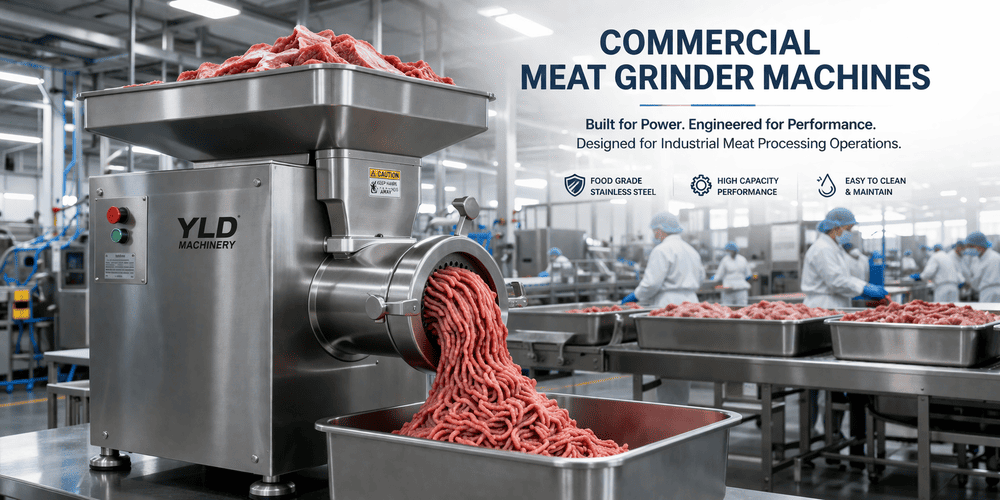
Commercial meat grinder machines are industrial equipment designed to process meat into uniform textures for food production, butchery, and commercial kitchens. Unlike household grinders, these machines are built for higher capacity, continuous operation, and strict food safety requirements.
A complete commercial meat grinder system consists of several core components that work together to ensure performance, efficiency, and consistency.
| Component | Typical Specification | Function |
| Motor | 1–10 HP | Provides continuous power |
| Auger (Screw) | Stainless steel | Moves meat forward |
| Blade | Hardened steel | Cuts meat efficiently |
| Grinding Plate | 3–12 mm holes | Controls texture size |
| Hopper | Food-grade steel | Holds input material |
| Housing | Stainless steel | Ensures hygiene |
| Safety System | Overload protection | Prevents damage |
Each component directly affects output quality. For example, a high-power motor combined with a precision blade system ensures smooth grinding and consistent texture, while low-quality components can cause uneven results, clogging, and increased maintenance.
Many businesses source these machines from small kitchen appliances manufacturers in China to ensure cost efficiency and scalability.
Commercial Meat Grinder Selection Chart
This simplified chart helps B2B buyers quickly select the right commercial meat grinder based on processing scale and application requirements.
| Machine Type | Typical Capacity | Best Use |
| Light-Duty Grinder | 50–150 kg/hour | Small butcher shops, restaurants |
| Medium-Duty Grinder | 150–500 kg/hour | Supermarkets, meat shops, catering businesses |
| Heavy-Duty Industrial Grinder | 500–1000+ kg/hour | Food processing plants, frozen meat production |
| Bone Meat Grinder | 300–800 kg/hour | Poultry processing, pet food industry |
This type of chart is important because it directly aligns machine selection with business scale and production demand, reducing the risk of undercapacity or overinvestment.
Why Commercial Meat Grinder Machines Are Essential for Modern Food Processing
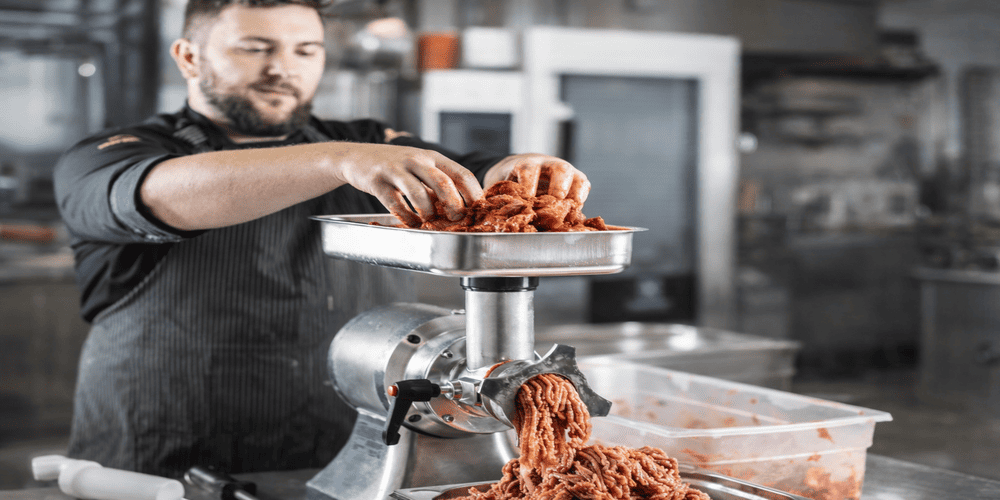
Commercial meat grinder machines have become a core component in modern food processing because they combine efficiency with production consistency.
The ability to process large volumes of meat continuously allows businesses to streamline operations and maintain uniform product quality. This directly improves production speed and reduces dependency on manual labor.
Another key advantage is scalability. Commercial meat grinders are available in different capacities and configurations, making them suitable for small butcher shops as well as large industrial processing facilities.
Operational efficiency also plays a major role. With high-output capacity and optimized motor performance, these machines help reduce processing time, lower operational costs, and improve overall business profitability.
Types of Commercial Meat Grinder Machines
Commercial meat grinder machines are categorized based on capacity, automation level, and application requirements. Each type offers specific advantages depending on business scale and production needs.
Selecting the right type is critical because it directly affects processing efficiency, labor cost, maintenance, and output consistency. In commercial operations, the wrong machine type can lead to bottlenecks, increased downtime, and higher operational costs.
| Type | Configuration | Common Applications |
| Tabletop Grinder | Compact, small capacity | Small butcher shops, restaurants |
| Floor-Standing Grinder | Medium to high capacity | Supermarkets, meat processing units |
| Industrial Automatic Grinder | High capacity, automated | Food processing factories |
| Frozen Meat Grinder | Heavy-duty, high torque | Frozen meat processing, industrial use |
Tabletop Meat Grinder Machines
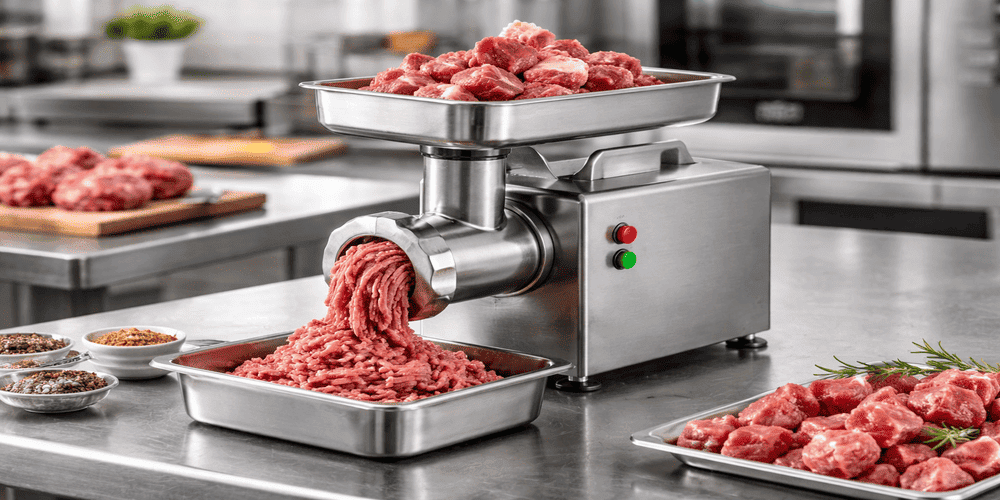
Tabletop grinders are compact machines designed for low to medium production volumes. They are typically used in small butcher shops and commercial kitchens where space is limited.
These machines are cost-effective and easy to operate, but they are not suitable for continuous high-volume processing.
Floor-Standing Meat Grinder Machines
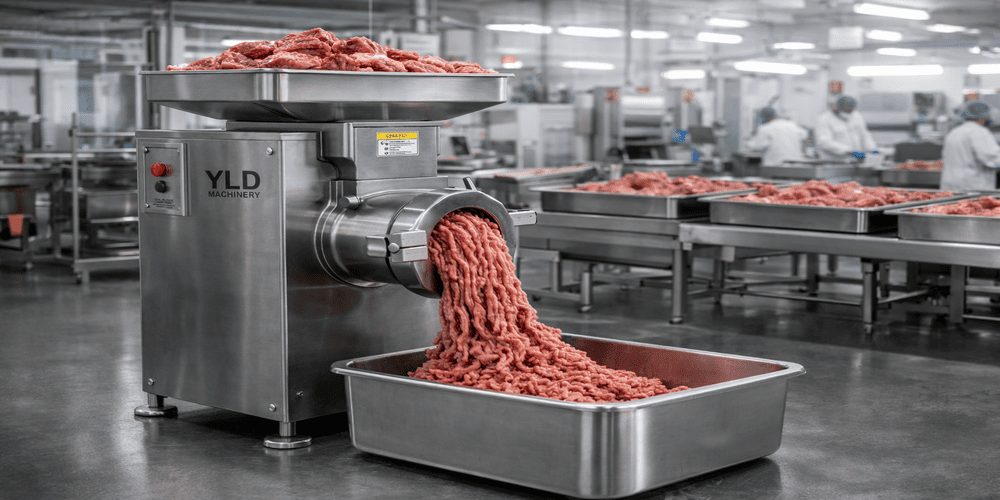
Floor-standing grinders offer higher capacity and more powerful motors, making them suitable for medium to large-scale operations.
They provide better durability and can handle longer working hours, making them ideal for supermarkets and meat processing businesses.
Industrial Automatic Meat Grinder Machines
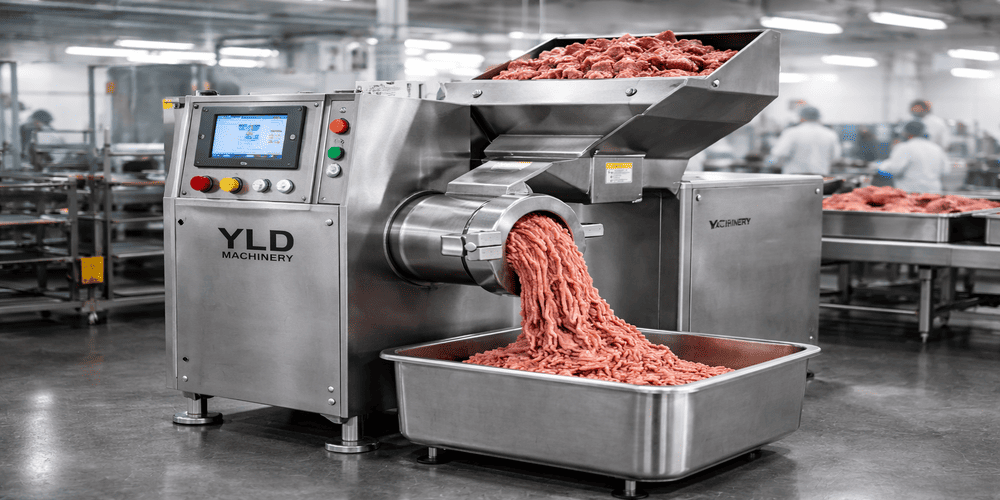
Industrial grinders are designed for continuous, large-scale production. These machines often include automated feeding systems and advanced control features.
They are widely used in food processing plants where efficiency, consistency, and labor reduction are critical.
Frozen Meat Grinder Machines
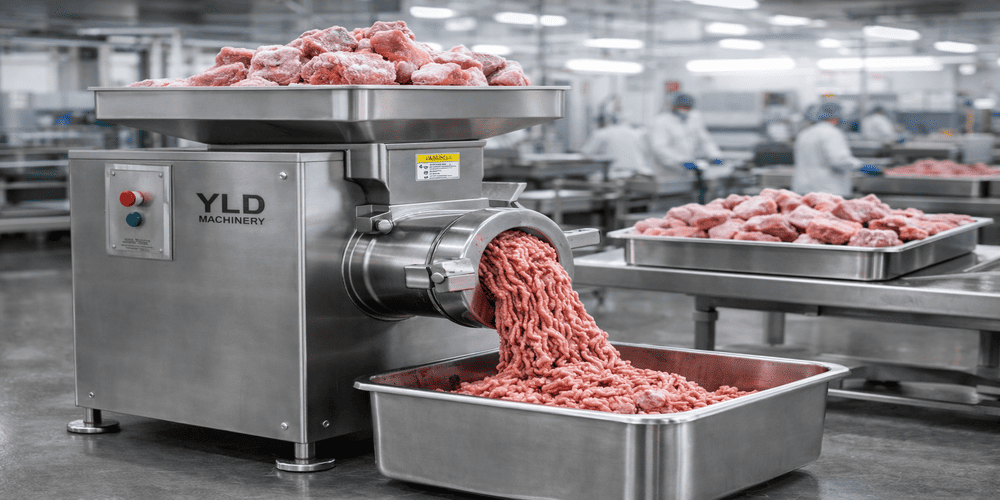
Frozen meat grinders are heavy-duty machines specifically designed to process frozen meat blocks. They use high-torque motors and reinforced components to handle hard materials without performance loss.
These machines are essential for industrial applications such as frozen food production and large-scale meat processing.
For integrated solutions, many buyers also explore meat grinder and food chopper solutions for multi-functional processing needs.
Performance Requirements for Commercial Meat Grinder Machines (Critical for Industrial Use)
In commercial meat processing, machine performance is defined by measurable technical parameters rather than basic functionality alone. Unlike small-scale equipment, industrial operations require precise control over capacity, power efficiency, hygiene standards, and durability to ensure consistent output and long-term reliability.
Each parameter directly affects production efficiency, product quality, operational cost, and compliance with food safety standards.
| Parameter | Recommended Value | Standard / Benchmark | Impact |
| Grinding Capacity | 150–1000+ kg/hour | Business scale-based | Determines production output |
| Motor Power | 1–10 HP | Industrial grade | Ensures continuous operation |
| Material | Food-grade stainless steel (304/316) | Food safety standards | Hygiene + corrosion resistance |
| Blade & Plate Quality | Hardened steel | Industry standard | Consistent texture |
| Noise Level | <75 dB | Industrial equipment norm | Better working environment |
| Safety System | Overload + emergency stop | CE / ISO compliance | Operator safety + durability |
Key Performance Factors Explained
Grinding Capacity (Output Efficiency)
Grinding capacity defines how much meat a machine can process within a specific time frame. In commercial operations, selecting the correct capacity is essential to maintain workflow efficiency and avoid production delays. Undersized machines can create bottlenecks, while oversized equipment may increase unnecessary costs.
Motor Power (Operational Stability)
Motor power determines the machine’s ability to handle continuous workloads. A higher horsepower motor ensures stable performance, especially when processing large volumes or tougher meat. Insufficient motor power can lead to overheating, reduced efficiency, and frequent downtime.
Blade & Cutting System (Texture Consistency)
The cutting system directly impacts the final meat texture. High-quality blades and precision grinding plates ensure uniform output, which is critical for product quality in commercial food processing. Poor cutting components often result in uneven grinding and increased reprocessing.
Material Quality (Hygiene & Durability)
Using food-grade materials and following food safety standards is essential for maintaining hygiene and regulatory compliance in meat processing operations.
Material selection plays a key role in both hygiene and machine lifespan. Food-grade stainless steel construction helps prevent contamination, resists corrosion, and simplifies cleaning. This is especially important for businesses operating under strict food safety regulations.
Noise Level (Work Environment Impact)
Noise output affects the overall working environment, particularly in indoor commercial settings. Machines with lower noise levels improve operator comfort and reduce fatigue during long working hours, contributing to better productivity.
Safety & Protection Systems (Operational Security)
Modern commercial meat grinders are equipped with safety features such as overload protection and emergency stop systems. These features help prevent machine damage, reduce accident risks, and ensure stable long-term operation.
Choosing the right specifications is easier when working with an experienced OEM and ODM kitchen appliance manufacturer.
Modular Commercial Meat Grinder Systems
Modular commercial meat grinder systems are increasingly used in industrial food processing due to their flexibility, scalability, and easier maintenance.
Unlike traditional machines, modular designs allow key components such as blades, plates, and motors to be replaced or upgraded without replacing the entire unit. This reduces downtime and long-term operational costs.
| Feature | Benefit |
| Replaceable components | Faster maintenance and lower repair cost |
| Scalable configuration | Adaptable to different production volumes |
| Durable construction | Extended machine lifespan |
| Upgrade capability | Supports future production expansion |
Production Layout & Workflow Optimization
Proper workflow planning ensures smooth operation, consistent output, and reduced processing time in meat production environments.
| Factor | Operational Impact |
| Machine placement | Improves workflow efficiency |
| Feeding system | Ensures continuous processing |
| Output handling | Reduces bottlenecks |
| Integration with other equipment | Enhances productivity |
Commercial Meat Grinder Manufacturers
Choosing the right commercial meat grinder manufacturer is essential to ensure consistent machine performance, product quality, and long-term operational reliability in food processing businesses.
Unlike standard equipment, industrial meat grinders often require application-specific configurations, durable construction, and compliance with food safety standards. This makes supplier selection a critical factor in achieving stable production and minimizing long-term risks.
Manufacturer Evaluation Criteria
| Factor | What to Check | Why It Matters |
| Engineering capability | Motor performance, cutting system design, material quality | Ensures stable operation and consistent output |
| Customization support | Capacity, configuration, automation level, voltage options | Matches specific business requirements |
| Certifications | CE, ISO, food-grade compliance | Ensures safety and regulatory approval |
| Industry experience | Food processing, butcher equipment, industrial use cases | Indicates reliability and proven performance |
| Production capacity | Lead time, bulk order handling, OEM/ODM capability | Ensures timely delivery and scalability |
A professional commercial meat grinder manufacturer does more than supply machines. The right supplier provides technical support, helps optimize machine configuration, and offers customized solutions based on production needs and business scale.
Customized Commercial Meat Grinder Solutions
Modern food processing businesses often require equipment that goes beyond standard machine configurations. Customized commercial meat grinder solutions allow businesses to optimize performance, improve efficiency, and align equipment with specific production requirements.
In large-scale operations, customization is not optional. It ensures that machines match production capacity, workflow design, and processing needs while supporting long-term scalability and cost efficiency.
Key Customization Options in Commercial Meat Grinders
| Custom Feature | Custom Feature | Business Benefit |
| Capacity customization | Output range (kg/hour), motor power | Matches production demand and avoids bottlenecks |
| Machine configuration | Tabletop, floor-standing, industrial setup | Fits workspace and operational layout |
| Material selection | Stainless steel grade (304/316) | Ensures hygiene and corrosion resistance |
| Cutting system options | Blade type, plate size variations | Controls texture and product consistency |
| Automation level | Semi-auto, fully automatic systems | Reduces labor cost and increases efficiency |
| Voltage & compliance | Voltage options, certifications (CE/ISO) | Supports international usage and regulations |
Customized commercial meat grinder solutions are widely used in food processing plants, butcher chains, frozen food production, and large-scale commercial kitchens where standard machines cannot meet operational or performance requirements.
Commercial Meat Grinder Selection Guidelines
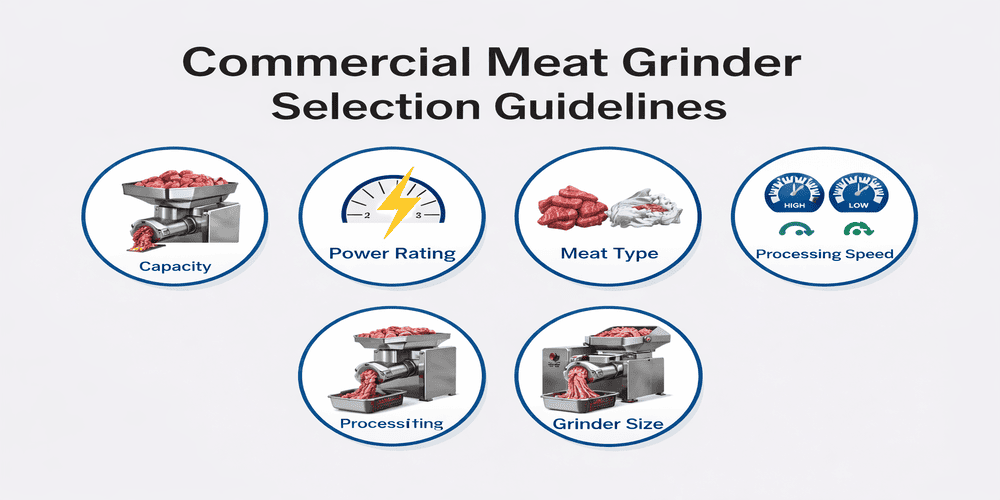
Selecting the right commercial meat grinder requires balancing technical performance with operational efficiency and product consistency.
Key Selection Factors
- High-capacity motors (1–10 HP) ensure stable, continuous grinding
- Stainless steel construction improves hygiene and durability
- Precision blades and plates ensure uniform texture output
- Proper capacity selection prevents production bottlenecks
- Efficient cooling and overload protection increase machine lifespan
Production Capacity Reference Table
| Business Type | Recommended Capacity |
| Small butcher shop | 50–150 kg/hour |
| Supermarket / meat shop | 150–500 kg/hour |
| Food processing plant | 500–1000+ kg/hour |
| Frozen meat processing | 300–800 kg/hour |
These capacity ranges ensure that machine performance aligns with production requirements, helping businesses maintain efficiency, reduce downtime, and optimize operational costs.
Smart Control & Automation in Commercial Meat Grinder Systems
Modern commercial meat grinder machines increasingly integrate smart control technologies to improve operational efficiency, reduce labor dependency, and enhance production consistency. In industrial food processing, equipment is no longer operated manually alone but is supported by automated systems that optimize performance based on real-time conditions.
Smart systems enable better process control, reduce human error, and improve overall production management, making them essential for large-scale food processing facilities.
| System | Function | Benefit |
| PLC Control | Automated machine operation | Improves efficiency and consistency |
| Variable Speed Drive (VSD) | Adjustable motor speed | Optimizes output and energy use |
| Sensors | Load / temperature monitoring | Prevents overload and damage |
Key Automation Technologies Explained
PLC Control Systems
Programmable Logic Controllers (PLC) are widely used in industrial meat processing equipment. They allow operators to automate grinding processes, control feeding rates, and manage system performance through a centralized interface. This ensures consistent output and reduces manual intervention.
Variable Speed Control
Variable speed systems allow operators to adjust grinding speed based on meat type and production requirements. This flexibility improves product quality, reduces wear on components, and enhances energy efficiency.
Sensor-Based Monitoring
Modern machines use sensors to monitor load, temperature, and operational conditions in real time. These systems help prevent overheating, reduce downtime, and extend machine lifespan by triggering automatic adjustments or shutdowns when needed.
Why Smart Systems Matter in Industrial Meat Processing
In large-scale operations, smart control systems are not optional. They directly impact productivity, operational cost, and long-term equipment reliability.
Key advantages include:
- Improved production efficiency through automation
- Reduced labor dependency and human error
- Better machine protection and lower maintenance cost
- Real-time monitoring for consistent performance
- Integration with full meat processing lines
By combining commercial meat grinder machines with intelligent control systems, businesses can achieve higher efficiency, better product consistency, and scalable production operations.
Applications of Commercial Meat Grinder Machines
Commercial meat grinder machines are widely used across multiple food processing environments due to their ability to deliver consistent output, high efficiency, and scalable production.
In food processing plants, they enable large-volume meat production with uniform texture, ensuring consistent product quality.
In butcher shops and retail meat businesses, they support daily operations by providing fresh, customized meat processing based on customer demand.
In hospitality and commercial kitchens, they help streamline food preparation while maintaining hygiene and efficiency.
In frozen food production, heavy-duty grinders are used to process frozen meat blocks for industrial-scale applications.
| Application | Purpose |
| Food processing plants | High-volume production |
| Butcher shops | Fresh meat preparation |
| Hotels & restaurants | Efficient food processing |
| Frozen food industry | Industrial meat grinding |
How to Choose Commercial Meat Grinder Machines (Step-by-Step)
Selecting the right commercial meat grinder requires a structured, business-focused approach to ensure performance, efficiency, and long-term return on investment.
Step 1: Define Your Application
Identify where and how the machine will be used by butcher shop, supermarket, food processing plant, or frozen meat production. Each application requires different capacity, power, and durability levels.
Step 2: Determine Required Capacity
- 50–150 kg/hour → Small-scale operations
- 150–500 kg/hour → Medium businesses
- 500+ kg/hour → Industrial processing
Choosing the correct capacity prevents production delays and avoids overinvestment.
Step 3: Evaluate Machine Performance
- Motor power (1–10 HP) for continuous operation
- Blade and plate quality for consistent texture
- Stainless steel construction for hygiene compliance
Step 4: Select Machine Type
- Tabletop → Compact, low-volume use
- Floor-standing → Medium to high capacity
- Industrial automatic → Continuous large-scale production
- Frozen meat grinder → Heavy-duty processing
Step 5: Consider Automation & Control
- PLC systems for process automation
- Variable speed control for flexibility
- Sensors for overload protection
Step 6: Check Scalability & Maintenance
Choose machines with modular components that allow easy maintenance, spare part replacement, and future upgrades as your business grows.
This structured selection approach ensures that commercial meat grinder machines are optimized for production efficiency, operational stability, and long-term business growth.
You can also explore complete commercial kitchen appliances solutions to match your full production setup.
Business-Based Selection Table
| Business Type | Recommended Capacity | Machine Type | Key Focus |
| Butcher shop | 50–150 kg/hour | Tabletop | Cost efficiency |
| Supermarket | 150–500 kg/hour | Floor-standing | Balanced performance |
| Food processing plant | 500–1000+ kg/hour | Industrial automatic | High output |
| Frozen food industry | 300–800 kg/hour | Frozen meat grinder | Heavy-duty use |
Quick Summary
50–150 kg/hour → Best for small butcher shops and low-volume operations
150–500 kg/hour → Ideal for supermarkets and medium-scale businesses
500+ kg/hour → Used in industrial food processing and high-volume production
Commercial meat grinder machines provide consistent output, higher processing efficiency, and scalable production compared to manual or low-capacity equipment.
Conclusion
Commercial meat grinder machines have become essential equipment for modern food processing and meat production operations. They combine high-capacity performance, consistent output quality, and operational efficiency.
By understanding machine types, performance factors, and selection criteria, businesses can choose equipment that delivers reliable production, reduces costs, and supports long-term growth.
For more insights, explore our kitchen appliance knowledge and buying guides to make informed decisions.
CTA
If you are planning a food processing or meat production project, choosing the right commercial meat grinder machine is critical for achieving both efficiency and consistent output quality.
YLD Home Appliances provides customized commercial meat grinder solutions tailored to industrial needs, including flexible configurations, reliable performance, and scalable production capabilities.
Our team supports OEM and ODM customization for large-scale food processing and commercial applications.
Frequently Asked Questions (FAQs)
What is a commercial meat grinder machine?
A commercial meat grinder is industrial equipment designed to process large volumes of meat into uniform textures for food processing, butcher shops, and commercial kitchens.
Where are commercial meat grinders commonly used?
They are widely used in food processing plants, butcher shops, supermarkets, hotels, and frozen food production facilities.
What capacity should I choose for my business?
Capacity depends on your production needs. Small businesses typically use 50–150 kg/hour, while industrial operations require 500+ kg/hour machines.
What factors affect meat grinder performance?
Key factors include motor power, grinding capacity, blade quality, material construction, and machine configuration.
Are commercial meat grinders energy efficient?
Modern machines are designed for optimized power consumption, especially models with variable speed control and efficient motors.
What is the lifespan of a commercial meat grinder?
With proper maintenance and quality components, commercial meat grinders can last several years in continuous operation.
What is the difference between manual and automatic grinders?
Manual grinders require operator input, while automatic machines offer higher efficiency, consistent output, and reduced labor dependency.
Can commercial meat grinders be customized?
Yes, many manufacturers offer OEM/ODM customization, including capacity, configuration, material, and automation features.
How do you ensure food safety in meat grinders?
Using food-grade stainless steel, proper cleaning procedures, and certified machines ensures compliance with hygiene standards.
What type of grinder is best for frozen meat?
Frozen meat grinders with high-torque motors and reinforced components are best suited for processing frozen meat blocks.
Can these machines be used in industrial production?
Yes, industrial meat grinders are specifically designed for large-scale food processing and continuous production environments.
How do I choose the right commercial meat grinder?
Define your application, select the required capacity, evaluate performance features, and choose a reliable supplier for long-term efficiency.