

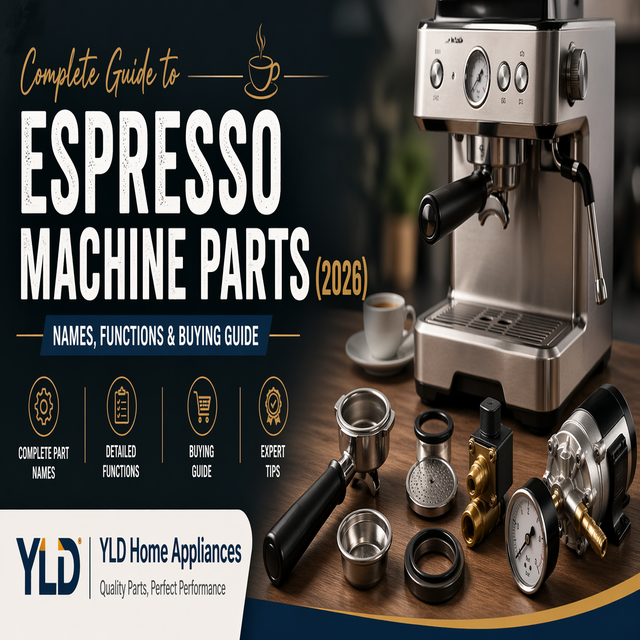

Espresso machines are precision driven coffee systems designed to deliver consistent flavor, aroma, and extraction quality. Unlike simple brewing devices, these machines rely on multiple interconnected components working together under controlled pressure and temperature. Each of these components plays a specific role, and even a minor variation in performance can significantly impact the final cup of coffee.
Understanding espresso machine parts is essential for anyone involved in coffee preparation, equipment maintenance, or product sourcing. For home users, this knowledge helps improve coffee quality and reduce common issues. For technicians, it enables efficient troubleshooting and repair. For B2B buyers and importers, it becomes a critical factor in evaluating machine quality, supplier capability, and long term reliability.
In today’s competitive coffee equipment market, especially for businesses sourcing from China, buyers are no longer just looking at the outer design of machines. Instead, they focus on internal structure, material quality, and the performance of core components. This is where knowledge of espresso machine parts creates a strong competitive advantage.
This guide provide a complete understanding of espresso machine components, their functions, and their role in overall machine performance. We also introduces important considerations for buyers who want to source high quality machines or components for commercial use.
Key Takeaways
Before diving deeper into the technical sections, here are the most important points to understand:
- Espresso machines rely on multiple precision components working together
- The quality of espresso machine parts directly affects coffee taste and consistency
- Core components such as the pump, boiler, and group head are the most critical
- Regular maintenance and part replacement are necessary for long term performance
- B2B buyers must evaluate materials, certifications, and supplier capability
These takeaways will help you better understand the detailed explanations that follow.
What is an Espresso Machine?
An espresso machine is a specialized coffee brewing device that uses pressurized hot water to extract flavor from finely ground coffee. Unlike drip coffee makers, espresso machines operate at high pressure, typically around nine bars, which allows for a faster and more concentrated extraction.
The process involves forcing hot water through a compact layer of coffee grounds, resulting in a rich and intense beverage with a layer of crema on top. This process depends heavily on the coordination of various espresso machine parts.
Modern espresso machines come in different configurations, ranging from compact home units to large commercial systems used in cafes and restaurants. Regardless of size or design, all machines share a common goal: to deliver consistent pressure and temperature during extraction.
Types of Espresso Machines and Their Internal Differences
Understanding machine types is important because the design and quality of espresso machine parts vary significantly across categories.
Manual Espresso Coffee Machines
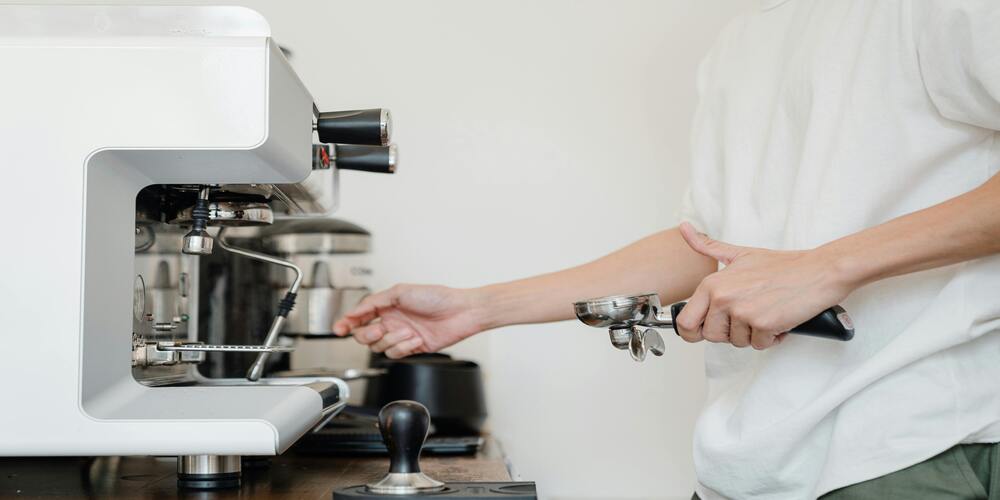
Manual machines require the user to control the entire brewing process. Pressure is generated by a lever, and there is minimal automation.
- Full control over extraction
- Requires skill and experience
- Fewer electronic components
These machines are often used by enthusiasts who prefer a hands on approach.
Semi Automatic Coffee Machines
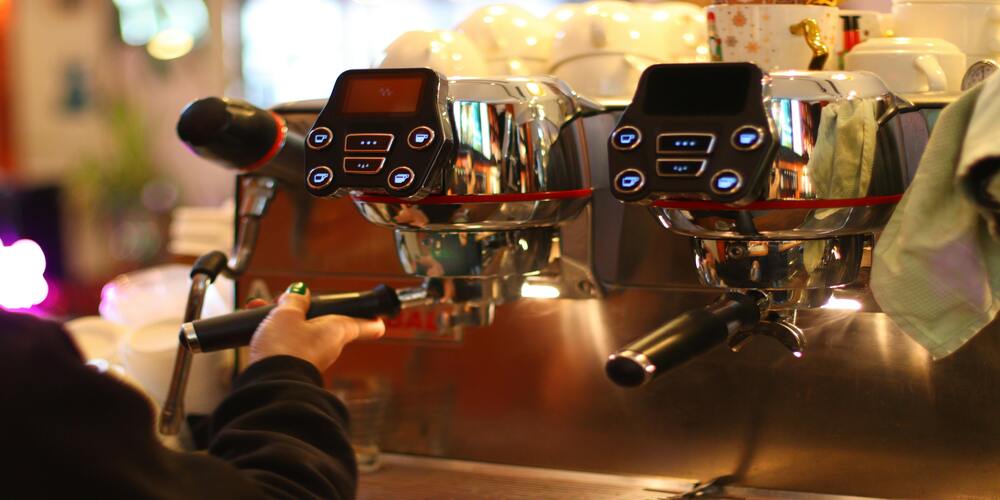
Semi automatic machines automate pressure generation using a pump but still require user control for grinding, tamping, and shot timing.
- Balanced control and convenience
- Common in both homes and small cafes
- Uses standard parts of the espresso machine such as vibratory or rotary pumps
Fully Automatic Coffee Machines

Fully automatic machines handle most of the brewing process, including water flow and shot timing.
- Easy to use
- Consistent results
- More complex internal components
Commercial Espresso Machines
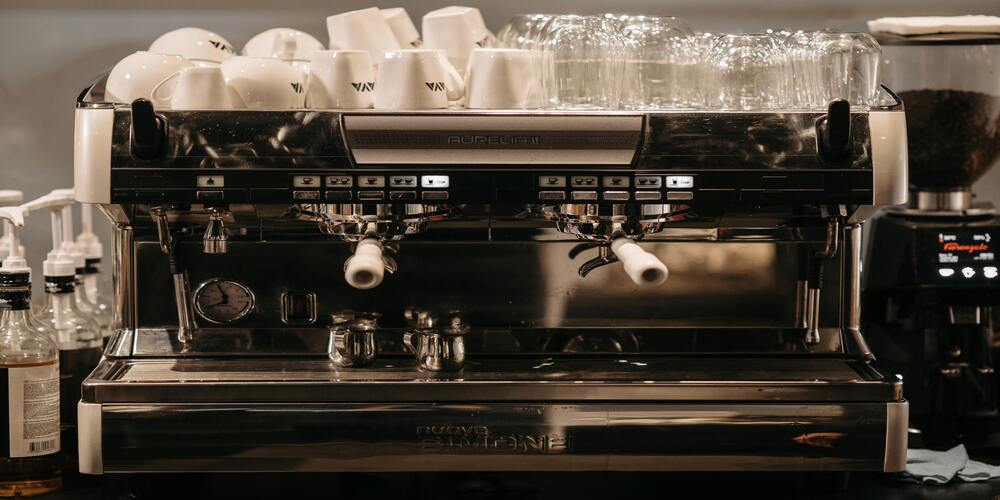
Commercial machines are designed for high volume environments such as cafes, hotels, and restaurants.
- Equipped with rotary pumps and dual boilers
- Built with high durability materials
- Designed for continuous operation
The espresso coffee machine parts used in commercial systems are significantly more robust compared to home machines.
Espresso Machine Parts Diagram Explained
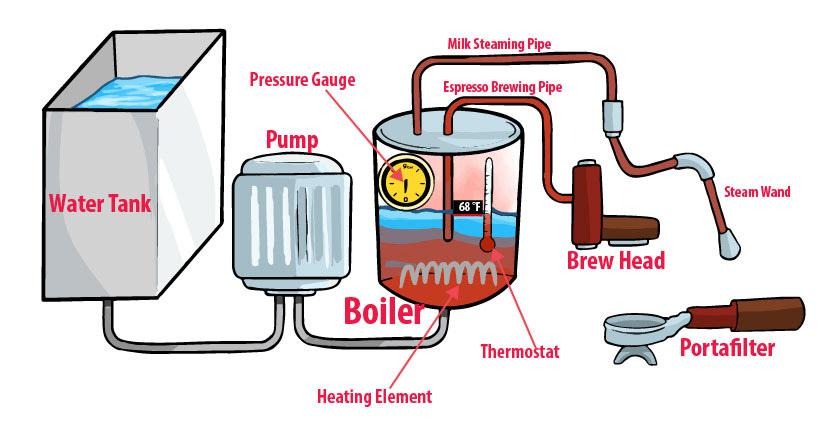
A visual understanding of espresso coffee machine parts name becomes more effective when supported by real specifications and system data. A standard espresso machine diagram highlights key components such as the boiler, pump, group head, portafilter, and steam wand, each operating within specific pressure, temperature, and flow ranges. These measurable parameters define how efficiently the machine performs during extraction.
Each component in the diagram is connected through pipes, valves, and sensors that regulate water flow (500–650 ml/min), pressure (~9 bar), and temperature (90°C–96°C). By analyzing these values within a diagram, users can better understand system performance, detect inefficiencies, and identify potential faults such as pressure drops or heat instability.
Espresso Machine Diagram Key Specifications
| Component | Specification | Typical Range | Function |
| Boiler | Brewing Temperature | 90°C – 96°C | Maintains extraction heat |
| Pump | Pressure | 8 – 10 bar | Forces water through coffee |
| Steam System | Steam Temperature | 120°C – 130°C | Milk frothing |
| Water Flow System | Flow Rate | 500 – 650 ml/min | Controls water delivery |
| Pipes & Valves | Material | Copper / Stainless Steel | Handles heat & pressure |
| Control System | Valve Type | Solenoid (electric) | Regulates water flow |
Main Espresso Machine Parts and Their Functions
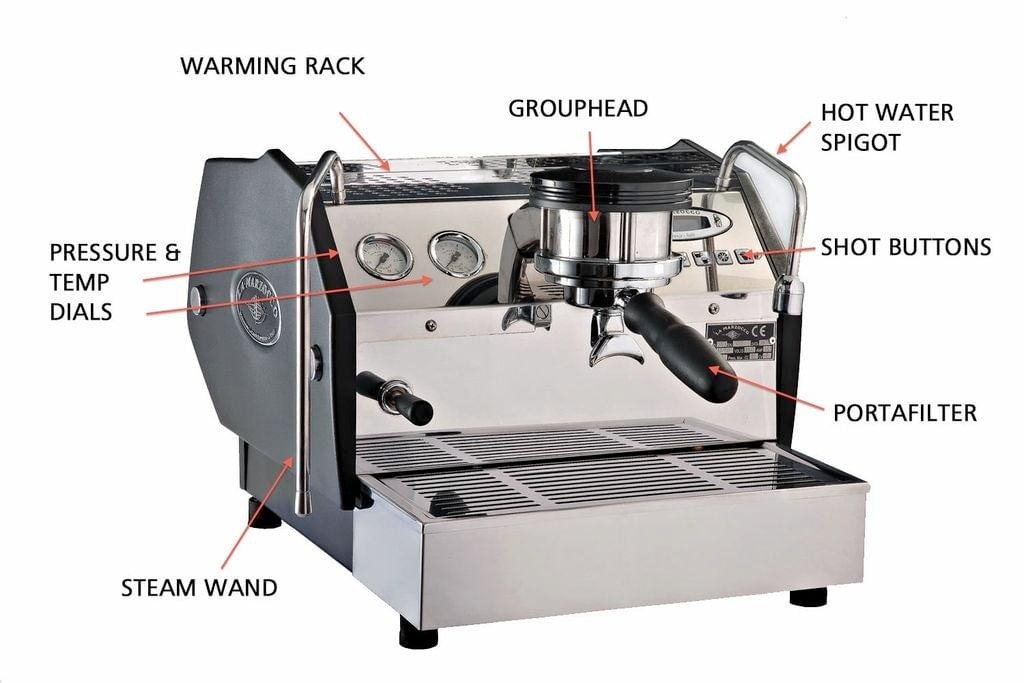
Each component plays a specific role in controlling pressure, temperature, and water flow during extraction. A clear understanding of these parts helps buyers and users make better decisions when selecting or maintaining espresso equipment.
Group Head
The group head controls how hot water is distributed evenly over the coffee grounds during extraction. A stable temperature and pressure at this point are critical for achieving balanced and consistent espresso.
| Specification | Details | Importance |
| Temperature Stability | 90°C – 96°C | Consistent extraction |
| Material | Brass / Stainless Steel | Heat retention |
| Pressure Handling | ~9 bar | Even water flow |
Portafilter
The portafilter holds the coffee grounds and locks securely into the group head to maintain pressure during brewing. Its design and material directly influence heat retention and extraction consistency.
| Specification | Details | Importance |
| Capacity | 7g / 14–20g | Dose control |
| Diameter | 49–58mm | Compatibility |
| Material | Steel / Brass | Durability |
Boiler / Heating Element
The boiler heats water to the required temperature for both brewing and steam production. Different boiler systems affect temperature stability, efficiency, and overall machine performance.
| Specification | Details | Importance |
| Brew Temp | 90°C – 96°C | Extraction quality |
| Steam Temp | 120°C – 130°C | Milk frothing |
| Type | Single / Dual | Performance |
Pump
The pump generates the pressure required to push hot water through the coffee grounds. Consistent pressure is essential for proper espresso extraction and crema formation.
| Specification | Details | Importance |
| Pressure | 8–10 bar | Proper extraction |
| Type | Vibratory / Rotary | Usage |
| Flow Rate | 500–650 ml/min | Consistency |
Steam Wand
The steam wand is used to inject steam into milk, creating the microfoam needed for milk-based coffee drinks. Precise control of steam flow helps achieve the desired texture and consistency.
| Specification | Details | Importance |
| Pressure | 1–1.5 bar | Milk texture |
| Nozzle | 1–4 holes | Foam quality |
| Material | Stainless Steel | Durability |
Pressure Gauge
The pressure gauge displays the internal pressure of the machine during operation. It allows users to monitor extraction conditions and ensure the machine is operating within the optimal range.
| Specification | Details | Importance |
| Range | 0–16 bar | Monitoring |
| Ideal | 8–10 bar | Accuracy |
| Type | Analog / Digital | Control |
How Espresso Machine Parts Work Together?
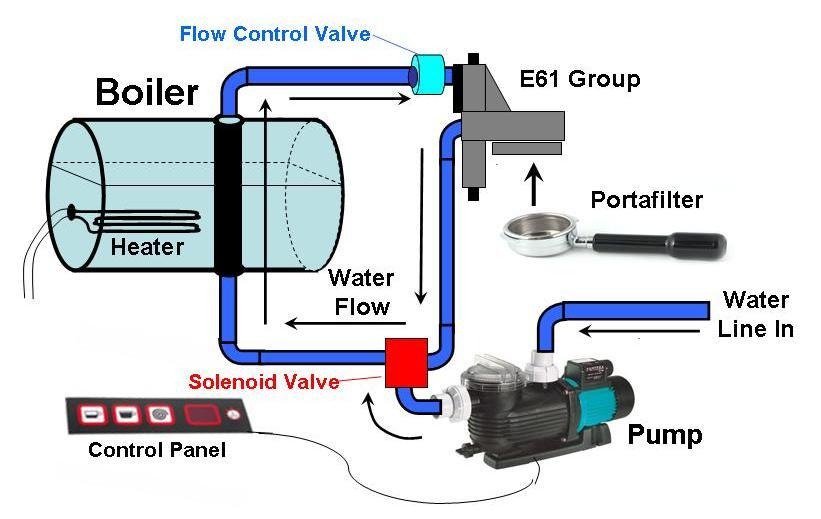
All espresso coffee machine parts work together in a controlled sequence where water, heat, and pressure are precisely managed. Water enters the system and is heated in the boiler to around 90°C–96°C. The pump then generates about 9 bar pressure, pushing hot water through internal valves toward the group head.
At the group head, pressurized water is evenly distributed over the coffee grounds in the portafilter, enabling proper extraction. Each component must perform accurately, as unstable temperature or low pressure directly affects taste, flow rate, and overall espresso quality, making system balance essential.
Commercial vs Home Espresso Machine Parts
Understanding the difference between commercial and home espresso machine parts is essential for selecting the right system based on usage requirements. These machines differ in pressure stability, boiler capacity, and material quality, which directly impact performance, durability, and daily output.
| Parameter | Home Espresso Machines | Commercial Espresso Machines | Impact |
| Pump Type | Vibratory Pump | Rotary Pump | Pressure stability |
| Boiler Capacity | 0.2L – 0.5L | 1L – 5L+ | Temperature consistency |
| Usage Capacity | 5–20 cups/day | 100–500+ cups/day | Workload handling |
| Material | Aluminum / Plastic | Brass / Stainless Steel | Durability |
| System Type | Single Boiler | Dual Boiler / HX | Performance efficiency |
Applications of Espresso Machine Parts in Different Industries
The demand for espresso machines extends beyond cafes. Different industries rely on high quality espresso coffee machine parts to deliver consistent performance.
Cafes and Coffee Shops
This is the most obvious application. Cafes require machines that can produce high volumes of espresso quickly without compromising quality. Components such as rotary pumps and dual boilers are essential in these environments.
Hotels and Hospitality
Hotels use espresso machines to provide premium coffee experiences to guests. Reliability is critical because downtime can directly impact customer satisfaction.
Restaurants
Many restaurants include espresso based beverages in their menus. Machines used in these settings must balance performance with ease of use.
Offices and Corporate Spaces
Modern workplaces often install espresso machines to improve employee experience. These machines are typically automatic or semi automatic and require minimal maintenance.
Retail and Private Label Brands
Businesses that import and sell coffee equipment rely heavily on sourcing high quality espresso coffee machine parts. Their focus is on product durability, consistency, and branding opportunities.
Why Understanding Espresso Machine Parts Matters
A detailed understanding of espresso machine parts provides both technical and commercial advantages.
First, it improves coffee quality. Each component plays a role in controlling extraction variables such as pressure and temperature. Even a small inconsistency in one part can affect the final taste.
Second, it simplifies troubleshooting. When users understand how components work, they can quickly identify problems and reduce downtime.
Third, it enables smarter purchasing decisions. Buyers who understand coffee machine parts can evaluate products more effectively and avoid low quality options.
For B2B buyers, this knowledge is particularly valuable because it directly impacts product performance, customer satisfaction, and long term business success.
Key Factors That Affect Espresso Machine Parts Performance
Several external and internal factors influence the performance of espresso coffee machine parts.
Water Quality
Water quality has a direct impact on machine performance. Hard water can cause scale buildup inside the boiler and pipes, reducing efficiency and lifespan.
Pressure Stability
Consistent pressure is essential for proper extraction. Fluctuations can lead to uneven results and poor coffee quality.
Temperature Control
Stable temperature ensures balanced extraction. Variations can cause under extraction or over extraction.
Maintenance Frequency
Regular maintenance keeps espresso machine parts in optimal condition. Neglecting maintenance leads to faster wear and performance issues.
Material Quality
The materials used in construction affect durability and heat retention. High quality materials improve overall performance and longevity.
Step by Step Guide: How to Choose the Best Espresso Machine Parts
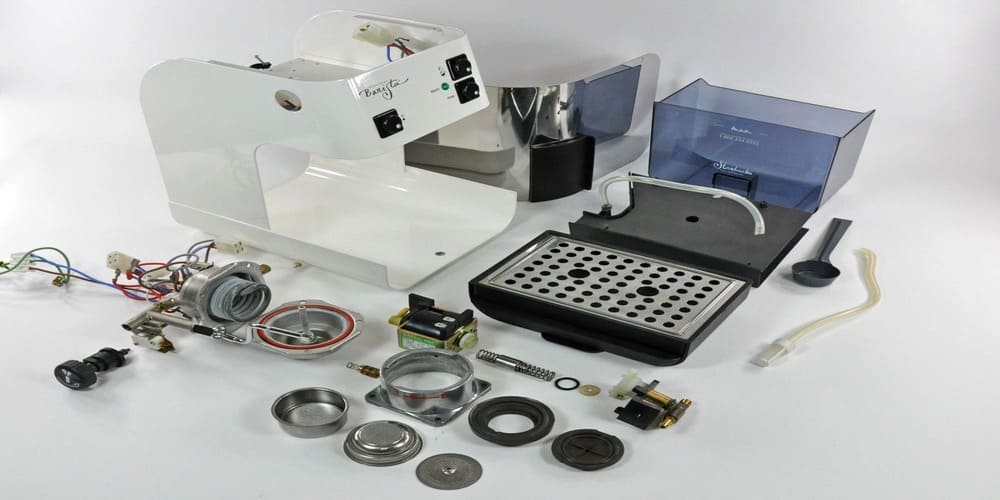
Choosing the best espresso coffee machine parts requires a clear understanding of compatibility, material quality, and performance requirements. Buyers should evaluate each component based on pressure handling, temperature stability, durability, and its suitability for the intended machine type.
Step 1: Identify Machine Type and Compatibility
The first and most critical step is to clearly identify the type of espresso machine you are working with. Different machines require different espresso machine parts, and even small compatibility mismatches can cause serious performance issues.
For example, commercial machines use larger and more durable components compared to home machines. Pumps, boilers, and group heads differ in size, pressure handling, and installation structure.
Buyers should:
- Check model specifications
- Confirm part dimensions
- Verify connection types
Ignoring compatibility often leads to leakage, pressure instability, or complete system failure.
Step 2: Understand the Function of Each Part
Before purchasing, it is essential to understand how each component contributes to the overall system. This allows buyers to prioritize critical espresso machine parts instead of focusing only on price.
For instance:
- The pump controls pressure
- The boiler controls temperature
- The group head controls extraction flow
A lack of understanding can result in choosing low quality components that negatively affect performance.
For B2B buyers, this step is crucial because it directly impacts customer satisfaction and product returns.
Step 3: Check Material and Build Quality
Material selection plays a major role in durability and performance. High quality espresso machine parts are typically made from stainless steel, brass, or other heat resistant materials.
Buyers should carefully inspect:
- Surface finishing
- Thickness of materials
- Resistance to corrosion
Low quality materials may reduce cost initially, but they increase maintenance and replacement costs over time.
Step 4: Verify Pressure and Temperature Specifications
Technical specifications must align with industry standards. Espresso extraction requires stable pressure and temperature, and any variation can affect coffee quality.
Buyers should check:
- Pressure capacity of the pump
- Temperature stability of the boiler
- Heat retention capability
Reliable suppliers provide detailed technical data sheets for all espresso machine parts.
Step 5: Check Seal Quality and Leakage Resistance
Seals and gaskets are often overlooked, but they are critical for maintaining system integrity. Poor quality seals can lead to water leakage, pressure loss, and frequent maintenance issues.
High quality seals should:
- Withstand high temperature
- Maintain flexibility over time
- Provide tight sealing
This is especially important for commercial machines that operate continuously.
Step 6: Evaluate Wear Resistance and Lifespan
Espresso machines operate under high pressure and temperature, which leads to gradual wear of components. Buyers should evaluate how long each part can perform under normal usage conditions.
Key considerations include:
- Resistance to heat stress
- Durability under repeated use
- Manufacturer testing standards
Investing in durable espresso machine parts reduces long term operational costs and improves reliability.
Step 7: Ensure Easy Installation and Maintenance Fit
Ease of installation is another important factor, especially for businesses managing multiple machines. Parts should be designed for quick replacement without requiring complex tools or technical expertise.
Buyers should prefer:
- Standardized components
- Modular designs
- Easy access for maintenance
This reduces downtime and improves operational efficiency.
Common Espresso Machine Parts Problems and Their Causes
Understanding common issues helps users maintain performance and quickly identify faults related to espresso machine parts. Below is a simplified overview of the most frequent problems and their root causes.
| Problem | Cause | Affected Parts | Solution |
| Weak espresso | Low pressure | Pump, Group Head | Adjust pressure |
| Water leakage | Worn seals | Gaskets, O-rings | Replace seals |
| No steam | Low heating | Boiler, Steam Wand | Clean / check boiler |
| Inconsistent taste | Temp fluctuation | Boiler, Control System | Stabilize temperature |
| Slow flow | Blockage / scale | Blockage / scale | Descale system |
Maintenance Tips for Espresso Machine Parts
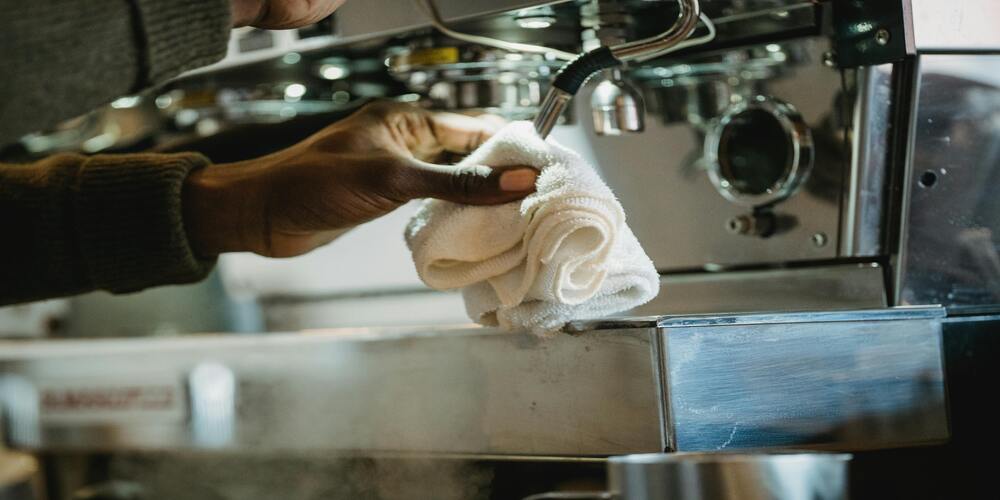
Regular maintenance of espresso machine parts is essential to ensure consistent performance, stable pressure, and optimal temperature control. Proper care not only extends the lifespan of key components but also prevents common issues such as blockage, leakage, and inconsistent extraction quality.
- Clean Components Regularly: Remove coffee residue and milk buildup from the group head, portafilter, and steam wand.
- Descale the System: Eliminate mineral deposits from the boiler, pipes, and pump to maintain efficiency.
- Inspect Seals and Gaskets: Check for wear or damage to prevent leakage and pressure loss.
Most Common Replacement Espresso Machine Parts
Over time, espresso coffee machine parts wear out due to constant exposure to heat (90°C–130°C), pressure (~9 bar), and water flow. Identifying frequently replaced components helps maintain consistent performance and prevents unexpected breakdowns in both home and commercial machines.
Common replacement parts include gaskets, shower screens, filter baskets, seals, and valves. These components directly affect pressure stability and water distribution. Regular replacement improves extraction quality and ensures smooth operation, making them essential for long-term machine reliability.
Why Should You Source Espresso Machine Parts from China?
China offers cost-efficient manufacturing, consistent quality, and large-scale production for espresso coffee machine. Buyers benefit from OEM customization, stable supply, and competitive pricing across various components.
Many suppliers also follow international standards like CE and RoHS, ensuring global compliance. This combination of affordability, flexibility, and reliability makes China a strong sourcing option for both small and large-scale buyers.
Why Should You Select OEM Espresso Machine Parts Manufacturer?
Selecting an OEM manufacturer is one of the most important decisions for businesses dealing with espresso machine parts. OEM production offers several advantages that are not available through generic suppliers.
Guaranteed Compatibility with Machines
OEM manufacturers design parts specifically for certain machine models. This ensures perfect compatibility and reduces the risk of installation issues.
Consistent Quality and Performance
OEM suppliers follow strict production standards and quality control processes. This ensures that all espresso machine parts perform consistently across different batches.
Higher Durability and Longer Lifespan
High quality materials and precise manufacturing techniques result in components that last longer and perform better under continuous use.
Better Safety and Compliance
Professional manufacturers provide certifications such as CE and ISO, ensuring that products meet international safety standards.
Technical Support and Customization
OEM suppliers offer technical assistance and customization options, including private labeling and product design modifications. This is especially valuable for businesses building their own brand.
Cost Analysis of Espresso Machine Parts
Understanding the cost of espresso coffee machine parts helps buyers estimate overall machine value and plan sourcing budgets effectively. Prices vary depending on material quality, type (home vs commercial), and manufacturing standards.
| Part | Typical Cost (USD) | Notes |
| Group Head | $40 – $120 | Brass/steel, commercial higher cost |
| Portafilter | $15 – $60 | Size & material impact price |
| Boiler | $50 – $200 | Depends on capacity & type |
| Pump | $20 – $80 | Vibratory vs rotary difference |
| Steam Wand | $10 – $40 | Design & build quality |
| Pressure Gauge | $8 – $30 | Analog cheaper than digital |
Related Coffee Machine Guides You Should Also Explore
Explore our in-depth coffee machine guides to gain more insights and make better buying decisions.
Fully Automatic Espresso Coffee Machine: Is It Worth It for Your Business in 2026?
How to Choose a Reliable Commercial Espresso Machine Supplier in China?
Commercial Coffee Brewer Machine: How to Choose the Right OEM Manufacturer for Bulk Orders in 2026
Commercial Coffee Machine Vs Espresso Machine: Which One Actually Fits Your Business Model in 2026?
7 Types of Commercial Coffee Brewer Machines: Complete B2B Buying Guide (2026)
How to Clean Commercial Coffee Brewer Machine (Complete Maintenance Guide 2026)
Final Thoughts
Understanding espresso machine parts helps ensure better performance, consistent coffee quality, and long term reliability. Each component, from the pump and boiler to the smallest seal, plays a direct role in controlling pressure, temperature, and extraction accuracy.
For individual users, this knowledge helps improve daily usage and reduces common issues. For businesses and B2B buyers, it becomes a strategic advantage when evaluating product quality, selecting suppliers, and building a competitive product line.
If you are looking to source high quality parts of an espresso machine or develop your own branded coffee appliances, working with a reliable manufacturing partner is the key to success.
Whether you are an importer, distributor, or brand owner, partnering with Shenzhen YLD Home Appliances can help you build a strong product line and grow your business with confidence.
Contact us today to explore customized solutions and take your coffee equipment business to the next level.
Frequently Asked Questions (FAQs)
Q1: Do espresso machines have plastic parts?
Answer: Yes, some machines include plastic components in non critical internal areas. However, high quality coffee machine components are usually made from metal materials. These materials provide better durability, heat resistance, and long term performance stability.
Q2: What are the main parts inside an espresso machine?
Answer: The main components include the pump, boiler, group head, and portafilter. Each of these internal components plays a role in extraction performance. Together, they control pressure, temperature, and water flow for consistent results.
Q3: Why do espresso machines lose pressure over time?
Answer: Pressure loss usually occurs due to wear in internal sealing components. Faulty pumps or blocked passages can also reduce system pressure efficiency. Regular maintenance helps keep internal machine components working properly and consistently.
Q4: Can espresso machine parts be cleaned at home?
Answer: Yes, most components can be cleaned easily using basic tools and methods. Regular cleaning prevents buildup and improves overall machine performance and hygiene. Some complex internal components may require professional servicing for deeper maintenance.
Q5: What materials are best for coffee machine components?
Answer: Stainless steel and brass are commonly used for durability and heat resistance. These materials perform well under high pressure and temperature conditions consistently. They also offer longer lifespan compared to plastic or lower quality alternatives.
Q6: Do commercial machines use different components than home machines?
Answer: Yes, commercial machines use stronger and more durable internal components. They are designed for continuous operation and higher performance requirements daily. Home machines use simpler designs suitable for light and occasional usage environments.
Q7: How can I improve the lifespan of coffee machine components?
Answer: Regular cleaning and proper descaling help prevent buildup inside internal systems. Using filtered water reduces scaling and protects sensitive coffee machine components effectively. Routine coffee machine maintenance ensures consistent performance and extends overall machine lifespan significantly.
Q8: Are all coffee machine components compatible with every model?
Answer: No, compatibility depends on machine design, size, and technical specifications. Using incorrect coffee machine components can cause leakage, pressure issues, or system damage. Always verify product details before purchasing replacement parts for proper fit.
Q9: What causes leakage in coffee machines?
Answer: Leakage is usually caused by worn seals or loose internal connections. Damaged gaskets can reduce pressure and affect overall system performance significantly. Replacing faulty components quickly helps prevent further damage and costly repairs.
Q10: Is it better to choose OEM components for coffee machines?
Answer: Yes, OEM coffee machine components are designed for exact compatibility and consistent performance. They offer better durability compared to generic alternatives available in the market. Choosing OEM options reduces maintenance issues and improves long term reliability.