


A 2 group espresso machine is widely used in cafés, restaurants, hotels, bakeries, office coffee stations, and convenience stores where businesses need faster drink preparation. With two group heads, it can brew multiple espresso shots at the same time, making it suitable for medium to high daily beverage demand.
Compared with a single group espresso machine or standard home espresso machines, a 2 group model offers higher output and better workflow efficiency. Businesses use it because it allows baristas to brew coffee and steam milk simultaneously, reducing customer waiting time during busy hours.
For businesses, this machine improves service speed, supports consistent drink quality, and helps increase daily sales capacity. It also reduces workflow bottlenecks and can deliver better long-term value when selected based on operational needs.
This guide explains how to choose the right 2 group espresso machine, covering key technical specifications, machine configurations, pricing factors, and the seven most important things buyers should evaluate before making a purchase decision.
Quick Answer
A 2 group espresso machine is a commercial coffee machine built with dual group heads for simultaneous espresso extraction. Most models operate with 8L–14L boilers, 9–15 bar pressure, 3000W–6000W power systems, and produce 200–400 cups daily for medium to high-volume beverage operations.
Key Takeaways
- Dual group heads allow simultaneous espresso extraction
- Boiler capacity typically ranges from 8L–14L
- Brewing pressure operates between 9–15 bars
- Power rating usually ranges from 3000W–6000W
- Daily output reaches 200–400 cups
- Available in single, HX, dual, and multi-boiler systems
- Common voltage options include 110V, 220V, and 380V
- Pricing typically ranges from $800–$8,000+
What Are 2 Group Espresso Machines?
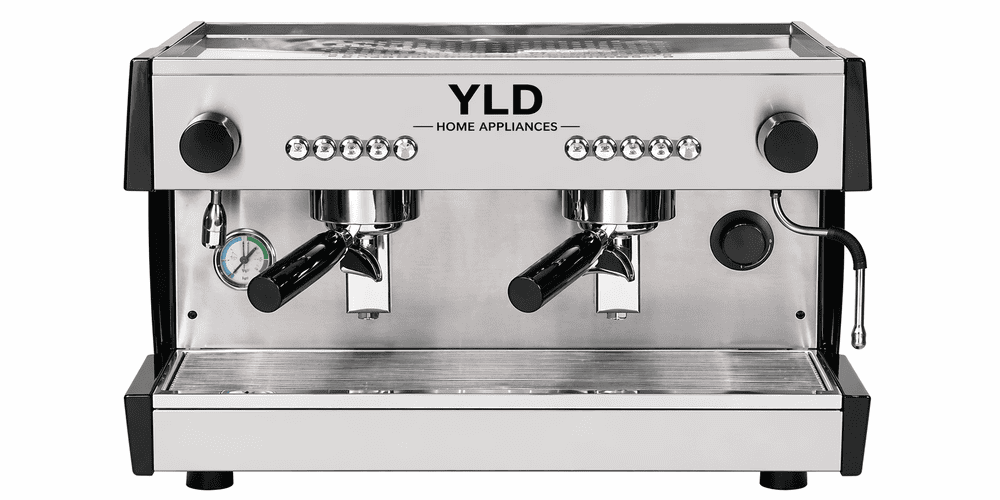
A 2 group espresso machine is a commercial coffee system built with two brewing group heads that allow baristas to extract multiple espresso shots at the same time. These machines are commonly used in cafés, hotels, restaurants, and busy beverage businesses that require stable temperature control, continuous steaming, and higher daily coffee output.
At a system level, a 2 group espresso machine is not a single unit but a combination of multiple technical components working together.
| Component | Typical Specification | Function | Practical Impact |
| Group Heads | Dual heads | Shot extraction | Higher output |
| Boiler | 8L–14L | Water heating | Stable temperature |
| Pump | 9–15 bar | Pressure control | Better extraction |
| Power | 3000W–6000W | Machine operation | Faster recovery |
| Steam Wand | 1–2 wands | Milk frothing | Faster service |
| Water System | Direct / tank | Water supply | Installation flexibility |
These components directly affect brewing consistency, machine efficiency, and long-term commercial performance.
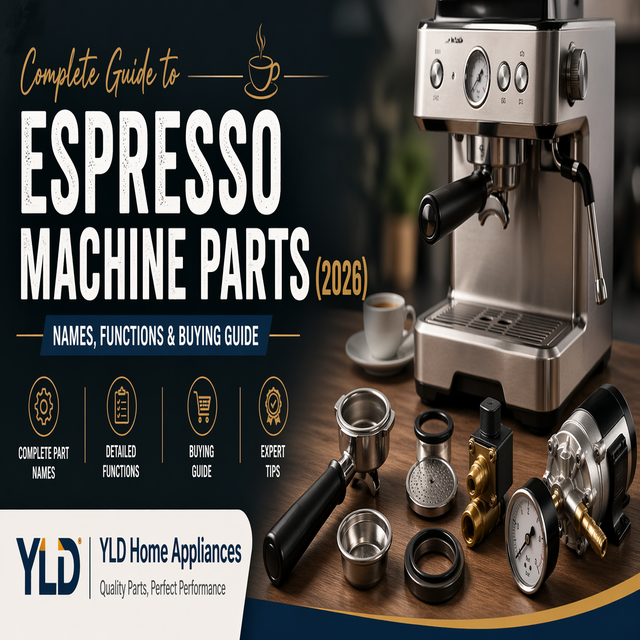
To better understand how internal brewing systems operate, see our Complete Guide to Espresso Machine Parts (2026): Names, Functions & Buying Guide
For a deeper look at automation technology and business efficiency, refer to our Fully Automatic Espresso Coffee Machine: Is It Worth It for Your Business in 2026?
How Does a 2 Group Espresso Machine Work?
A 2 group espresso machine pulls water from a direct plumbing line or internal reservoir. The boiler heats water to a stable brewing temperature while generating steam pressure for milk frothing. A pump system maintains consistent pressure to ensure balanced espresso extraction throughout daily operations.
When a barista activates the machine, pressurized water moves through the group heads. Ground coffee is extracted simultaneously from both groups, allowing faster drink preparation during busy commercial hours. At the same time, steam wands can froth milk for lattes and cappuccinos.
Single Vs Double Group Espresso Machines
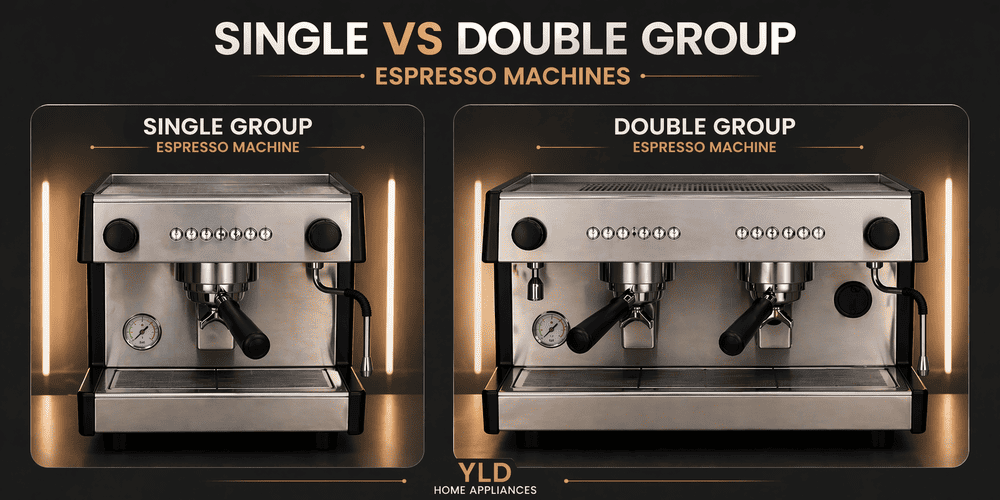
Many businesses move from single to double group machines when daily orders increase and faster service becomes necessary.
| Parameter | Single Group Machine | Double Group Machine | Business Impact |
| Brewing Heads | 1 head | 2 heads | Higher output |
| Boiler Capacity | 3L–6L | 8L–14L | Better heat stability |
| Power Rating | 1200W–2500W | 3000W–6000W | Faster recovery |
| Steam Wands | Single wand | Dual wands | Faster milk frothing |
| Daily Output | 50–150 cups | 200–400 cups | Handles peak demand |
| Pump System | Basic pump | Rotary/Vibration | Stable pressure |
Single group machines become inefficient when businesses experience higher customer traffic. They often create:
- Slower shot production
- Limited milk steaming
- Longer customer wait times
Double group machines solve these operational limitations by improving brewing speed and workflow efficiency. They help businesses maintain consistent drink quality during peak-hour operations.
For a broader equipment comparison, explore our detailed guide on Commercial Coffee Machine Vs Espresso Machine: Which One Actually Fits Your Business Model in 2026?
Technical Specifications of a 2 Group Espresso Machine
Technical specifications directly determine whether a machine can handle your daily beverage volume, maintain extraction consistency, and support long operating hours. Buyers should evaluate these specifications carefully before selecting a machine for commercial use.
| Specification | Typical Range | Technical Function | Business Impact |
| Boiler Capacity | 8L–14L | Stores heated water | Supports continuous brewing |
| Brewing Pressure | 9–15 Bar | Espresso extraction | Consistent coffee quality |
| Power Rating | 3000W–6000W | Heats machine systems | Faster recovery time |
| Voltage | 110V / 220V / 380V | Electrical operation | Market compatibility |
| Daily Output | 200–400 cups | Production capacity | Handles peak demand |
| Machine Weight | 50–80 KG | Structural stability | Installation planning |
Higher-spec machines usually provide better thermal stability, faster recovery speeds, and improved workflow efficiency. However, buyers should match specifications with actual business demand to avoid unnecessary operational costs.
Boiler Types in 2 Group Espresso Machines
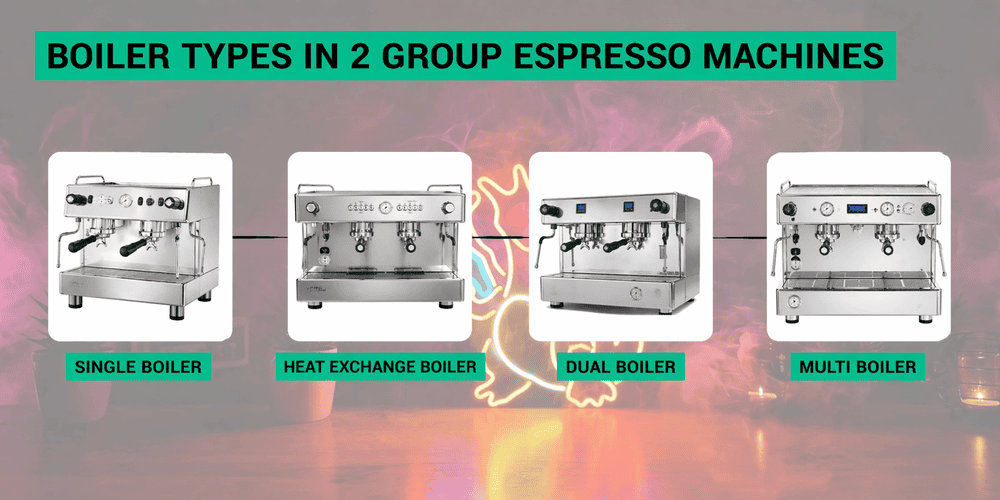
The boiler system directly affects steam output, temperature consistency, and machine recovery speed. Different boiler configurations are designed for different commercial workloads.
Single Boiler
A single boiler system uses one heating chamber for both brewing and milk steaming functions.
| Specification | Typical Range | Technical Impact |
| Boiler Capacity | 8L–10L | Supports light usage |
| Temperature Range | 90°C–125°C | Controls brewing/steam |
| Recovery Time | Moderate | Slower peak performance |
| Heating Element | 3000W–4000W | Basic heat output |
Heat Exchange Boiler
This system uses one large boiler with internal heat exchange tubes for simultaneous brewing and steaming.
| Specification | Typical Range | Technical Impact |
| Boiler Capacity | 10L–12L | Higher thermal stability |
| Brewing Temperature | 90°C–96°C | Stable extraction |
| Steam Pressure | 1–1.5 bar | Continuous steaming |
| Heating Element | 4000W–5000W | Faster recovery |
Dual Boiler
Dual boiler machines separate brewing and steaming functions for better temperature precision.
| Specification | Typical Range | Technical Impact |
| Boiler Capacity | 10L–14L | Handles heavy demand |
| Brew Boiler Temp | 90°C–96°C | Better extraction control |
| Steam Boiler Temp | 120°C–130°C | Strong steam pressure |
| Power Rating | 4500W–6000W | Faster operation |
Multi Boiler
Multi boiler systems use independent boilers for each group head in premium commercial machines.
| Specification | Typical Range | Technical Impact |
| Boiler Capacity | 12L+ | Maximum output |
| Group Boilers | Separate units | Better consistency |
| Temperature Stability | ±1°C | Precision brewing |
| Power Rating | 6000W+ | High performance |
Heat exchange and dual boiler systems are commonly preferred because they provide faster thermal recovery, stable steam pressure, and more consistent extraction performance during high-volume operations.
How to Choose the Right 2 Group Espresso Machine Supplier?
Choosing the right supplier is not only about lower pricing. Buyers should evaluate whether a manufacturer can provide stable brewing performance, durable internal components, and long-term technical support for commercial operations.
Poor supplier selection often leads to inconsistent extraction, weak steam performance, frequent maintenance issues, and spare part shortages that directly impact daily business operations.
Check Boiler Manufacturing Standards
Ask suppliers whether they use 304 stainless steel or copper boilers. Boiler capacity should typically range between 8L–14L for most 2 group machines.
Buyers should also verify heating element wattage, thermal recovery speed, and operating temperature stability under continuous usage.
Verify Pump System Performance
Most commercial machines use either rotary pumps or vibration pumps operating between 9–15 bars.
Request pressure testing reports to verify extraction consistency during back-to-back brewing cycles.
Review Group Head Engineering
Group heads should use high thermal retention materials such as brass or stainless steel.
Ask suppliers whether machines use E61 group heads, saturated group heads, or standard commercial designs.
Review Electrical Compatibility
International buyers should verify available voltage configurations such as 110V, 220V, and 380V before purchasing.
Incorrect voltage selection can create installation problems and increase operational costs after import.
Confirm Spare Parts Availability
Reliable suppliers should provide long-term access to pumps, boilers, valves, steam wands, and replacement components.
Limited spare parts support often leads to longer downtime and expensive repairs.
Check OEM Capabilities
Many importers require private label branding, packaging customization, and feature modifications.
Suppliers with stronger OEM capabilities usually offer better flexibility for distributors.
2 Group Espresso Machine Price Breakdown
The price of a 2 group espresso machine depends on automation level, boiler configuration, material quality, and production capacity. Machines with advanced temperature control systems, higher boiler capacity, and smart automation features usually cost more.
| Machine Type | Typical Cost | Technical Features | Best For |
| Semi-Automatic | $800–$1,500 | Manual extraction control | Small cafés |
| Automatic | $1,500–$3,000 | Programmable shot settings | Medium cafés |
| Volumetric | $2,500–$4,500 | Automatic water dosing | Busy restaurants |
| Fully Automatic | $4,000–$8,000 | Built-in grinder + milk system | Hotels/offices |
| OEM Custom Models | Varies | Branding + feature modifications | Distributors |
Several technical factors can increase machine pricing:
- Dual boiler systems
- Rotary pump upgrades
- PID temperature control
- Stainless steel internal components
- Touchscreen interfaces
- Smart cleaning systems
Buyers should compare long-term operating efficiency rather than choosing machines based only on lower upfront pricing.
Get the Right 2 Group Espresso Machine for Your Business
Choosing the right 2 group espresso machine requires more than comparing prices. Buyers need to evaluate boiler systems, automation levels, brewing capacity, and long-term maintenance requirements based on their business model.
At YLD Group, we provide OEM and ODM commercial espresso machine solutions designed for cafés, restaurants, hotels, distributors, and private label buyers worldwide.
Explore our coffee machine solutions to get expert technical support, accurate pricing, and reliable manufacturing for your business requirements.
Final Thoughts
A 2 group espresso machine has become a practical solution for businesses that need higher beverage output, stable extraction performance, and faster workflow efficiency in commercial environments.
By understanding coffee machine types, technical specifications, boiler systems, pricing factors, and supplier requirements, buyers can make better purchasing decisions and improve long-term operational performance.
Frequently Asked Questions (FAQs)
Q1: How many cups can a 2 group espresso machine produce daily?
Answer: Most commercial machines produce 200–400 cups per day depending on workflow efficiency. Higher-capacity models can handle peak-hour beverage demand more efficiently.
Q2: What boiler size is ideal for a 2 group espresso machine?
Answer: Most 2 group espresso machines use 8L–14L boilers for stable brewing performance. Larger boilers improve steam output and thermal recovery.
Q3: What pressure does an espresso machine use?
Answer: Most commercial units operate between 9–15 bars for proper extraction. Stable pressure improves crema quality and shot consistency.
Q4: Is a dual boiler system better for a 2 group espresso machine?
Answer: Dual boiler systems improve temperature stability in a 2 group espresso machine by separating brewing and steaming functions. Single boiler machines are more affordable but often deliver slower recovery during peak commercial usage.
Q5: What voltage options are available for a 2 group espresso machine?
Answer: Most suppliers offer 110V, 220V, and 380V configurations for international buyers. Proper voltage matching helps avoid installation issues.
Q6: Is a 2 group espresso machine suitable for small cafés?
Answer: Growing cafés often choose a 2 group espresso machine for faster service. Smaller coffee shops may prefer single group models.
Q7: How long does commercial espresso equipment last?
Answer: High-quality machines typically last 5–10 years with proper maintenance. Regular cleaning helps improve equipment lifespan.
Q8: What type of water connection does a commercial espresso machine need?
Answer: Most machines use direct plumbing systems for continuous water supply. Some models also include internal water tanks for flexible installation.
Q9: What pump type is better for commercial espresso machines?
Answer: Rotary pumps provide more stable pressure during continuous brewing cycles. Vibration pumps are cheaper but less suitable for high-volume operations.
Q10: What type of businesses should buy a 2 group espresso machine?
Answer: These machines are commonly used in cafés, hotels, restaurants, and bakeries. They work best for businesses with medium to high daily beverage demand.