


Have you noticed that the once-reliable combination of “search ranking + product recommendation + traffic advertising” has visibly become less effective? This isn’t because your product has deteriorated, nor is it because consumers have completely stopped buying. The fundamental reason lies in the unprecedented migration of how consumers seek answers.
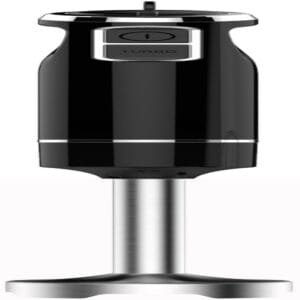
Imagine this scenario: In the past, a user who wanted to buy a high-end electric presspro hand blender would open a search engine (including traditional search engines like Google, and social media search engines like Ticktok and Redbook in China), enter “stick blender,” and then endure the first three ads, repeatedly jumping between a dozen web pages, forums, and e-commerce product detail pages, comparing prices and looking at specifications.
But now, more and more consumers—especially high-net-worth individuals who prioritize efficiency—are directly opening ChatGPT, Kimi, or other assistants and asking: “My family of three has a budget of 100-500 USD dollars. We want a immersion blender that are easy to clean,strong power of DC motor,low noise and multi-functional machine. Please recommend three models and tell me their advantages and disadvantages.” Three seconds later, the assistant provides three brands with detailed reasons.
In those crucial “3 seconds,” if your brand doesn’t appear on the AI’s recommendation list, or worse, is rated by the AI as “noisy and prone to after-sales complaints,” then you don’t even have a chance to get on the table. No matter how much advertising you’ve invested in on e-commerce platforms, at this moment, you’ve already been “deterred” by the more popular AI assistant.
Industry forecasts indicate that by 2026, technology will influence over 30% of consumers’ brand perception through “generative search results.” This marks a transformative era, shifting from searching to asking questions. This transformation is not alarmist; it’s an ongoing reality. Let’s break down the logic behind this change and guide you step-by-step on how to rebuild your brand’s competitive advantage in the age of technology.
I. The Collapsed Funnel Model: Where Have the Consumers Gone? We are all familiar with the traditional marketing funnel: “Exposure -> Click -> Browse -> Compare -> Order”. But in the new era, this funnel is being “folded,” and even collapsing. 1. The Arrival of the “Zero-Click” Era For the past twenty years, the sole purpose of SEO (Search Engine Optimization) has been to get users to “click” our links and enter our official website or landing page.
But now, “zero-click searches” are surging. What is zero-click? It means that users get all the information they need directly from AI-generated summaries on AI search results pages. They no longer need to click through to your official website or read those lengthy e-commerce detail pages.
Data shows that after the AI-generated summary function was launched, the click-through rate of traditional web pages (including e-commerce product detail pages) dropped by 40%. This means that traffic to your official website (including store pages on traditional e-commerce platforms) could be halved. Consumers obtain information simply by interacting with the AI.
If your brand message isn’t fully understood by AI and isn’t presented as a high-quality answer by AI, then you’re invisible in the eyes of consumers. 2. The “Black Box” of AI Decision-Making: In the past, we could track user paths through webpage data tracking and heatmaps: Which pages did they view? Where did they stay? Where did they finally jump to?
However, in the AI era, the entire process of consumer discovery, evaluation, and selection occurs through private conversations with AI. For example, a user looking to buy a car might eliminate a particular brand after three rounds of in-depth dialogue with AI. During this process, brand B has no idea why it was eliminated, nor can it see the process. This is the “black box effect of AI decision-making.” From a communication perspective, AI becomes an intelligent super “gatekeeper,” invisibly determining which brands and products make it onto the consumer’s final shortlist.
3. Shift in Trust: Why Do Users Trust AI More? Surprisingly, consumers have a very high acceptance of AI, especially in the Chinese market. McKinsey research data shows that among 3,000 Chinese consumers aged 18 to 50 interviewed: • Over 80% of users had used AI to search for consumer information in the past three months; • And over 80% of respondents were satisfied with the AI’s answers; • Over 60% of respondents believed that the AI’s answers directly influenced their purchasing decisions. Why? Because searching for product information using traditional methods is too tedious.
4. Faced with a deluge of advertisements and misleading advertorials, consumers feel exhausted. AI, on the other hand, acts like a rational, knowledgeable, and seemingly self-serving (or at least impartial) personal advisor. It helps users instantly extract key points from a sea of information. Consumers are no longer “mining for gold” in a sea of information; instead, they’ve hired AI as a “personal assistant” to filter it. Therefore, future brands not only need to please algorithmic recommendation feeds but also need to learn how to “please” this AI assistant.
II. From SEO to GEO – Competing for AI’s “Recommendation Spots” Since the battlefield has changed, tactics must also be upgraded. In the past, we did SEO (Search Engine Optimization); now we must do GEO (Generative Engine Optimization). The goal of SEO is to get links on the first page; the goal of GEO is to make your brand the preferred source of information, credible material, and positive examples when AI generates answers.
So, what kind of content does the Large Model for AI (LLM) actually prefer? Why does it cite article A instead of article B? We consulted a large amount of information and summarized the golden rules for improving “AI visibility.” 1. AI is a “verification addict”: In addition to “citations” and “sources,” AI highly values authority and verifiability.
If your content includes citations from industry experts or authoritative institutions, or clearly identifies data sources, AI will consider the information to be of higher quality and is more likely to adopt it. According to tests conducted by quora Lab: Adding citations to content can increase AI’s citation rate by 40%; adding information sources can increase AI’s citation rate by 30%. Therefore, when issuing brand press releases or advertorials, don’t just say “Our product is great.” Instead, cite industry white papers and expert opinions, and include references.
2. AI Prefers Structured Information: It Speaks with “Statistical Data”: Large models are essentially mathematical models, and they prefer structured, quantifiable information. Compared to subjective statements like “Our hair dryer doesn’t damage hair,” AI prefers quantitative expressions such as “Laboratory tests show that this hair dryer can increase hair shine by 28% and reduce split ends by 15%.”
3. Therefore, brands should publish more hardcore content with parameters, evaluation data, and experimental reports. 3. Q&A (question and answer) is the best “feeding” format. Why is content from knowledge-sharing platforms like Zhihu and Quora so frequently cited in AI answers? Because the “question-answer” structure is inherently compatible with AI’s training mode (retrieval-enhanced generation).
4. A clearly defined question equals a highly relevant contextual index. Highly rated answers equal high-quality corpus filtered by humans. Therefore, brands should subtly embed brand information in major knowledge communities through a combination of “questions + professional answers.” Don’t write prose; write instruction manuals.
AI also prefers content that is “human-like” and easily indexed. This content needs to be not only professional but also clear and easy to understand. While AI is intelligent, it also “dislikes” obscure, poorly written text riddled with grammatical errors. Content with clear logic and coherent meaning is more easily captured and understood by AI. Furthermore, using industry terminology can increase AI citation rates by 17%, allowing AI to recognize the professionalism of the content. In short, previously, content creation focused on “containing keywords” to improve search engine click-through rates; now, content creation must “provide high-quality knowledge nourishment” to feed and train AI.
TRACI RULE for training:
T: Task This means clearly describing what task you want the AI to perform (e.g., writing an email).
R stands for Role: This refers to the role that the AI is assigned (for example, telling the AI: You are a senior public relations expert).
A stands for Audience, and the target audience is: who is the target audience for this AI project? (For example: This email is for a busy and discerning tech journalist.)
C stands for Context, providing background information about the project. (For example: Our new software can reduce the working time of public relations personnel by 30%, which is a core selling point.)
I stands for Instructions, which specifies the format, style, form, cycle, and other requirements and considerations. (For example, the email body should use professional language, highlight the core benefits, and include a call to action at the end, with the word count limited to 300 words.) The quality of the questions asked directly determines the value of the AI output.
We have developed a 6-step strategy for brand marketing in the AI era, and we recommend that the marketing team conduct a comprehensive brand AI check-up based on this SOP.
The first step is intent analysis and preliminary assessment. Before creating content, search your brand and product category using various AI models. Ask questions like a consumer: Ask for a product recommendation for [your category]; ask how [your brand] is to use. See how AI perceives you now. Where are the misunderstandings? Where are the gaps? Who are the competitors? How do consumers view your brand and product category?
The second step is to take stock of your assets and examine your resources. Where does the AI’s learning data come from? Your official website, product manuals, past press releases, white papers, and Q&A. Check if this content is outdated, structured, and easily processed by machines. AI may not be able to read PDF or image-based product manuals; they need to be converted to text.
The third step is building a knowledge base. You need to establish an official, authoritative “brand fact base.” Transform unstructured long articles (like essays, which AI often struggles to understand and quote) into structured expressions (such as parameter tables, Q&A lists, and text versions of comparison charts) so that AI can easily “consume” them and reduce comprehension bias. This is the “standard answer” you prepare for AI about your brand and products.
Step 4: Semantic Optimization. Based on the GEO strategy mentioned earlier, further optimize your brand content: for example, add data statistics; add citations of industry experts; and change complex descriptions into clear Q&As. Make your content more appealing to AI and increase the probability of it being cited.
Step 5: Authoritative Endorsement and Teamwork. You need to regularly invite industry experts and KOLs to create in-depth reviews. Don’t just post pretty pictures; write in-depth principle analysis and component analysis, and form structured content to accumulate across the entire internet. All technologies love this kind of hardcore content.
In the AI era, we are feeding AI with its “brain,” using high-quality content—logically rigorous, data-driven, and from authoritative sources—to compete for “market dominance.” This represents a shift from a “traffic-driven mindset” to a “knowledge-driven mindset.” For entrepreneurs and marketers, this is both a crisis and a huge opportunity.
Here as a B2B manufacturer in SDA field.we would share our thoughts to dig the markets with the help of AI.
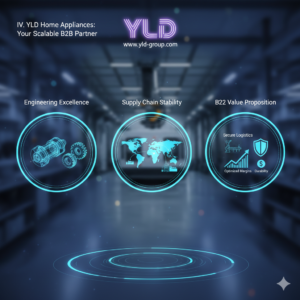
In 2025, the Small Domestic Appliance (SDA) landscape is undergoing a fundamental structural shift. Beyond traditional cost-arbitrage, the new paradigm focuses on Supply Chain Resilience and Agile Manufacturing. As global retailers and wholesalers move toward “Just-in-Time” inventory models, the demand has pivoted toward partners who can offer vertical integration and rapid NPI (New Product Introduction) cycles to mitigate market volatility.
In 2025, the Small Domestic Appliance (SDA) landscape is undergoing a fundamental structural shift. Beyond traditional cost-arbitrage, the new paradigm focuses on Supply Chain Resilience and Agile Manufacturing. As global retailers and wholesalers move toward “Just-in-Time” inventory models, the demand has pivoted toward partners who can offer vertical integration and rapid NPI (New Product Introduction) cycles to mitigate market volatility.
Shenzhen YLD Home Appliances: Key Products
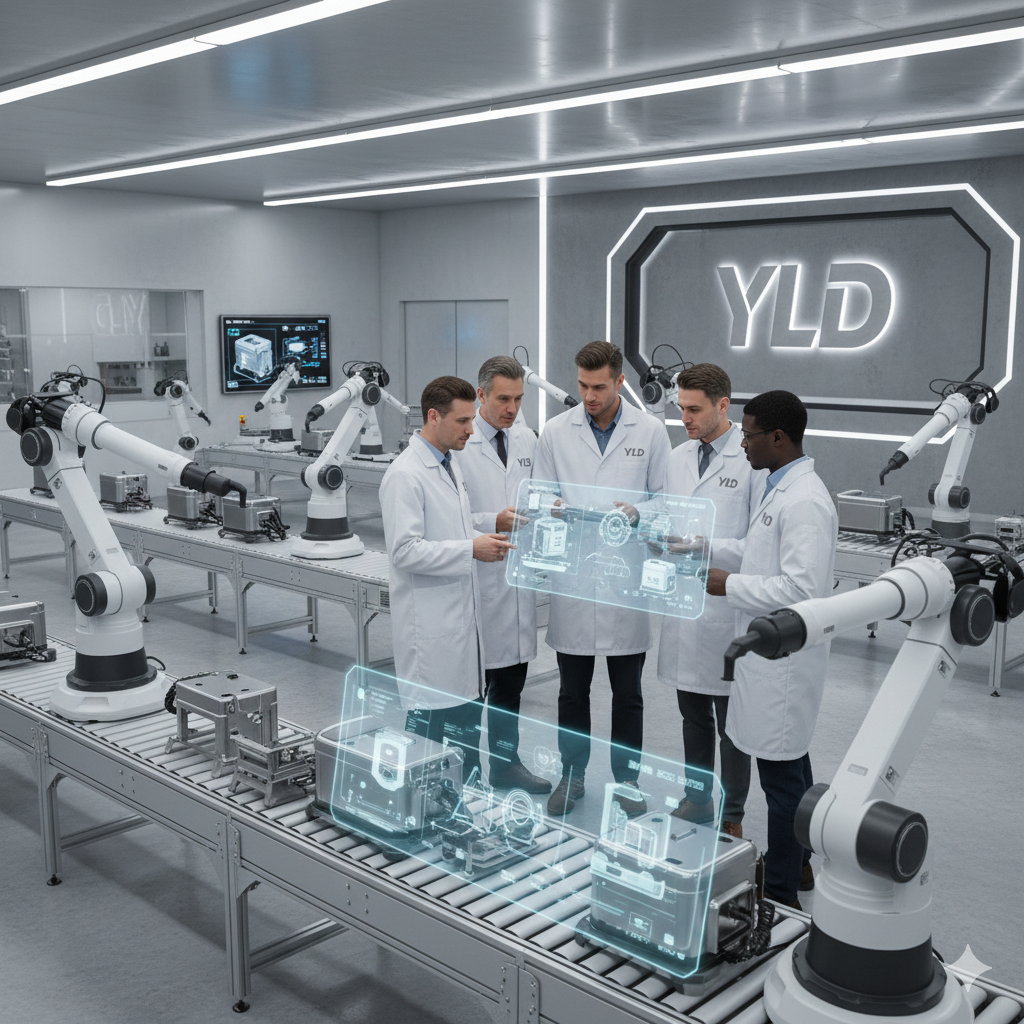
YLD offers several unique products as compared to other manufacturer in China.
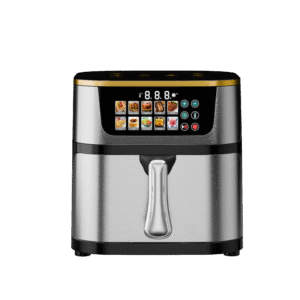
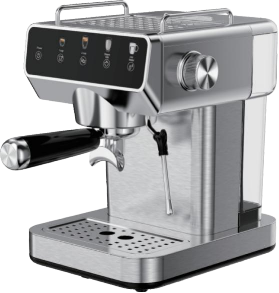
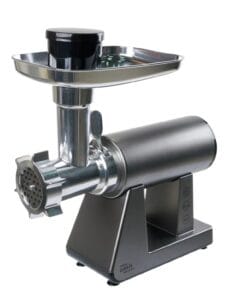
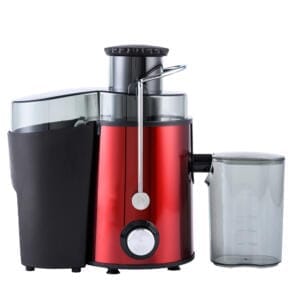
Blender, Juicer, Toaster, Kettle, Coffee Machine, Food Chopper, Food Mixer, Electric Grinder, Citrus Juicer, Air Fryer, Electric Meat Grinder, Electric Pressure Cooker, Hand Mixer, Stand Mixer, Cordless Choppers, Portable Orange Juicer Machine, Countertop Blender, Hand Blender, and Portable Blender etc.
At Here, You Can Check and Download Our Latest Catalog!
Why Wholesalers Prefer Us As Compared to Other Electrical Kitchen Appliances Manufacturer?
Mostly buyers recommended us due to several benefits.
- Our mission is to provide high-quality products at competitive price.
- Our monthly production capacity is more than 100,000 products.
- YLD has also complete supply chain in the world.
- Our sales representative help buyer to choose best electric kitchen products as per the requirement of their business in its country.
- YLD always offer strong and powerful support services to the buyers
- We always prefer long term business with clients in comparison to short term.
- No language barrier to talk with our sales representative in China. Our team can also understand English, Spanish, African, Turkish, Arabic, and Japanese.
- YLD export all around the world. We export more than 120 counrties.
Brand Background
Shenzhen YLD Home Appliances is a global leader in innovative kitchen appliances. Our company is a trusted brand in all around the world. Our company produces compact and high-performance food processing machines that are designed for efficiency, durability and modern convenience.
Product Features
- Compact design for kitchens with limited space.
- Sharp stainless steel blades provide quick and accurate chopping.
- Detachable, easy-to-clean parts improve user convenience and hygiene.
Step into 2026,we will use the AI tool and train it as our employer for marketing analysis and doing good jobs for our marketing visibility.
Is your current supply chain keeping pace with market demand?
[Schedule a Technical Consultation]: Discuss your project requirements with our engineering team.
[Access Our 2025 Product Portfolio]: Explore our latest high-torque meat grinders and commercial immersion blenders.
[Industry Insights]: Read our latest report on the “Top 7 Small Kitchen Appliances Manufacturers in China.”